There are wines you taste, enjoy and move on from, and then there are those that make you curious enough to want to know who made them!
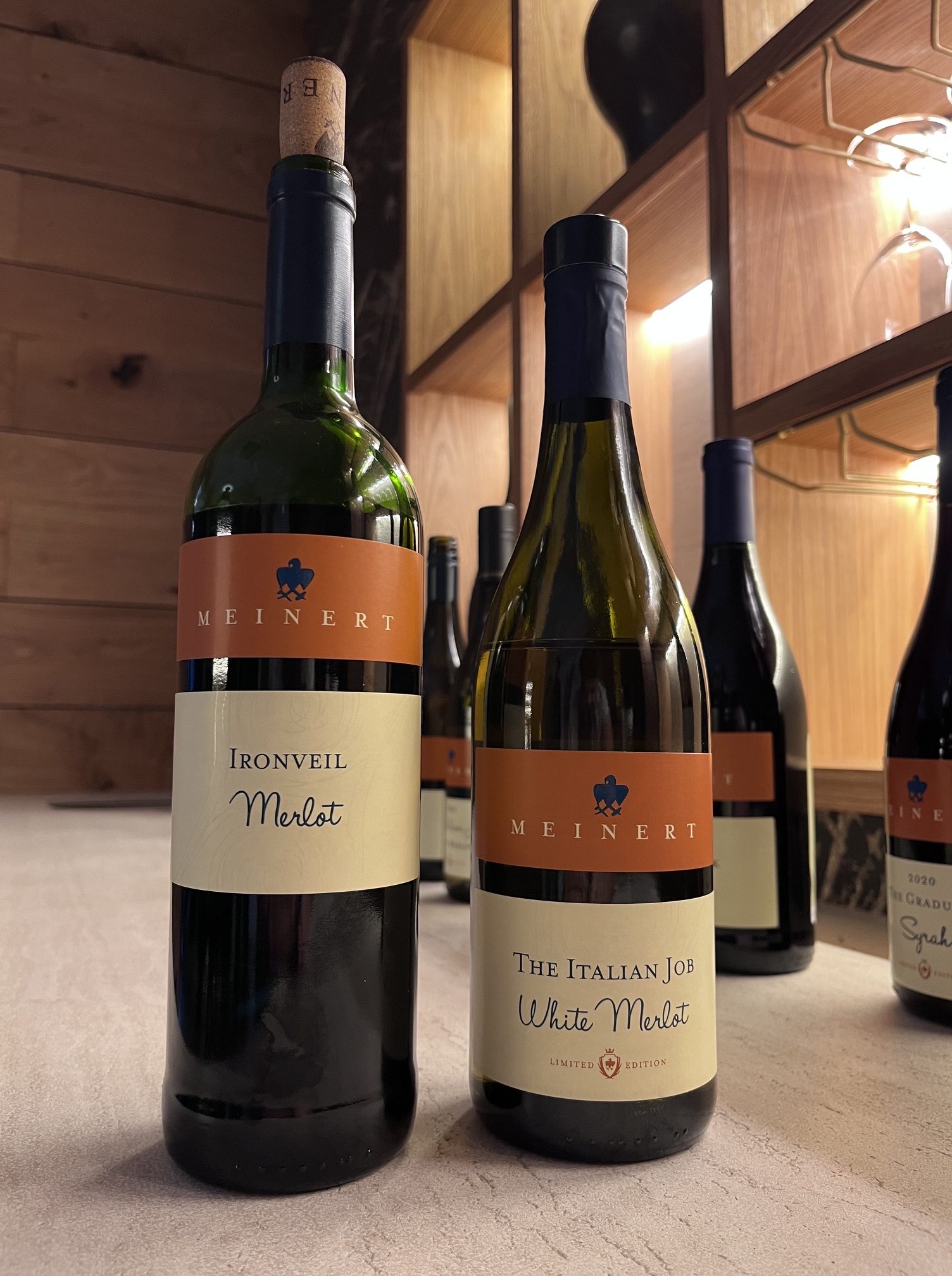
For me, Meinert’s The Italian Job was firmly in the second category, after tasting in at Cape Wine last year. A white wine made from Merlot was always going to get my attention, but more importantly, it was hella good. Good enough that I later included it as one of my wines for the Sommelier Shootout event hosted at La Petite Ferme a short while back.
I remember on the night of the Sommelier Shootout, the other sommeliers looking at me as if I’d lost the plot when I told the room that I didn’t really see Meinert’s The Italian Job as a Blanc de Noir. Technically, of course, it is. It’s made solely from Merlot, with the grapes whole bunch pressed to limit colour and tannin extraction. But I wanted people to look beyond the category and consider it as a serious white wine, made from red grapes. This isn’t a wine made quickly and sent on its way. The juice is fermented and matured in French oak, with previous vintages also undergoing partial malolactic conversion. More recent technical information indicates that the wine can spend up to ten months in barrel before bottling. That’s a considerable amount of work for a wine that could easily be dismissed simply because of the category it falls into. Personally, The Italian Job deserved to be judged in the same conversation as other serious barrel fermented white wines. That was the point I wanted to make that evening, and hopefully get a few people in the room thinking about the category a little differently. And, much to my delight, the wine won its flight, outperforming both the Oldenburg Vineyards Chenin Blanc 2019 and the Vondeling Babiana 2023…two serious barrel fermented white wines! Such an impressive showing!
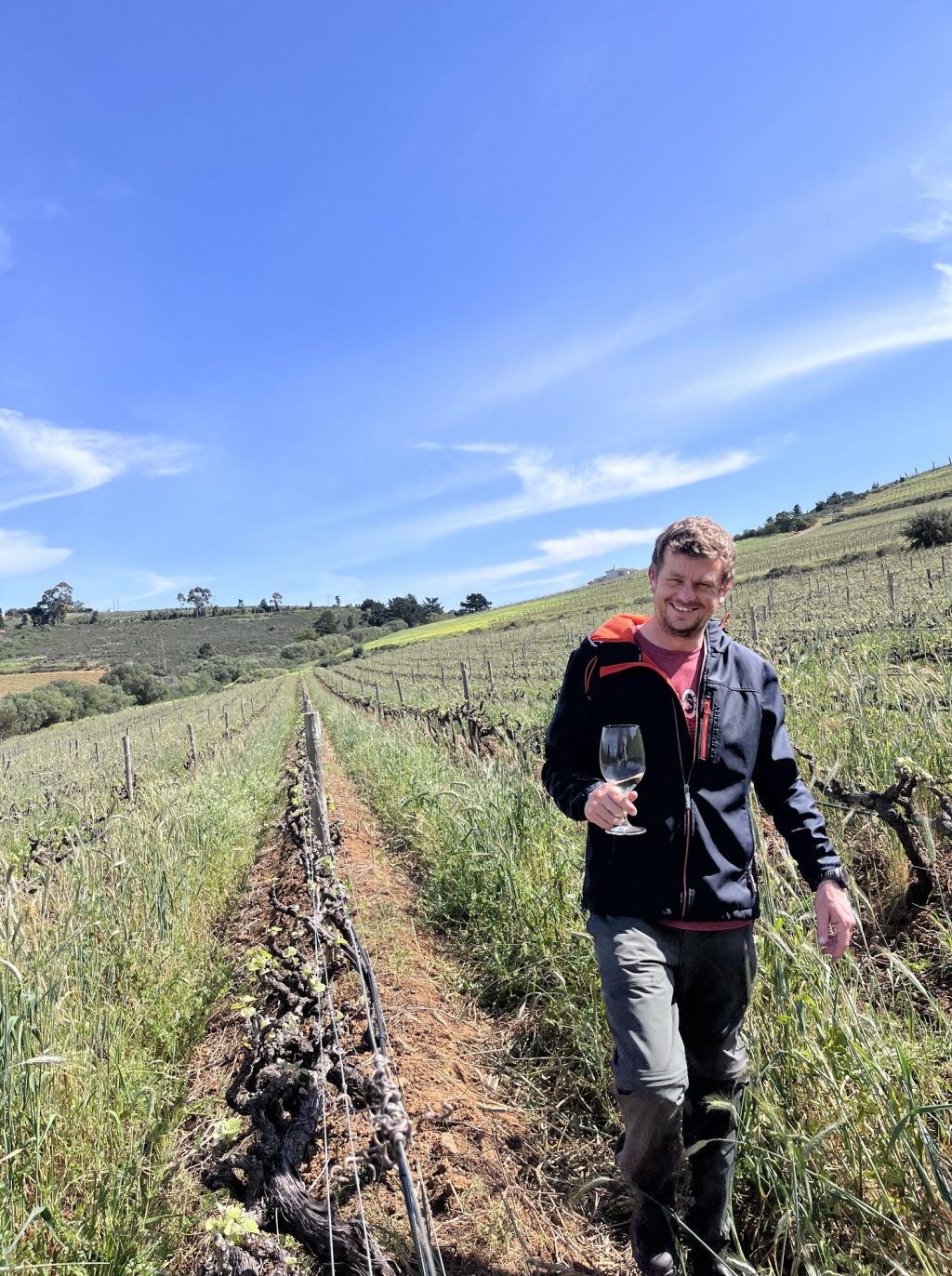
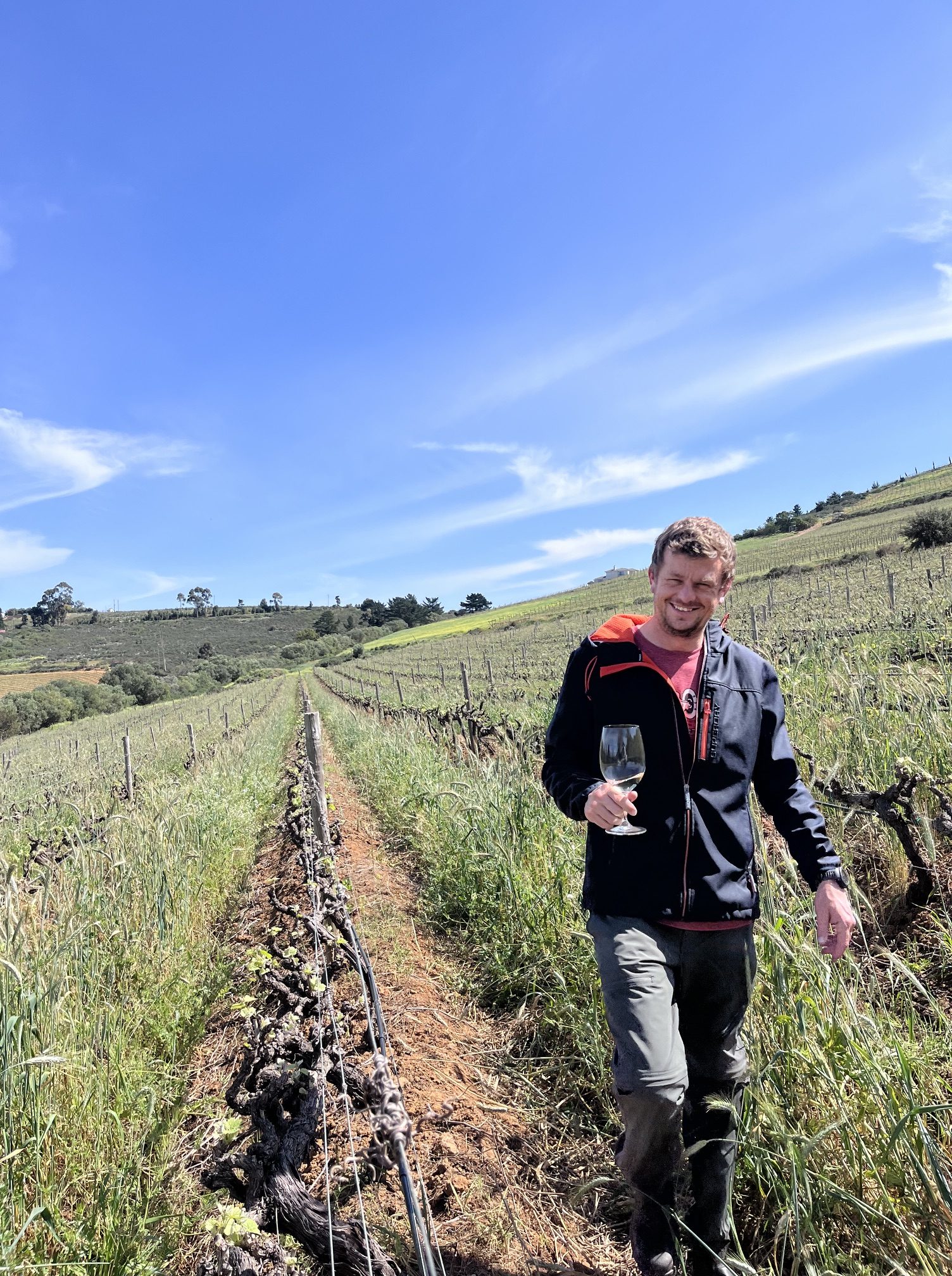
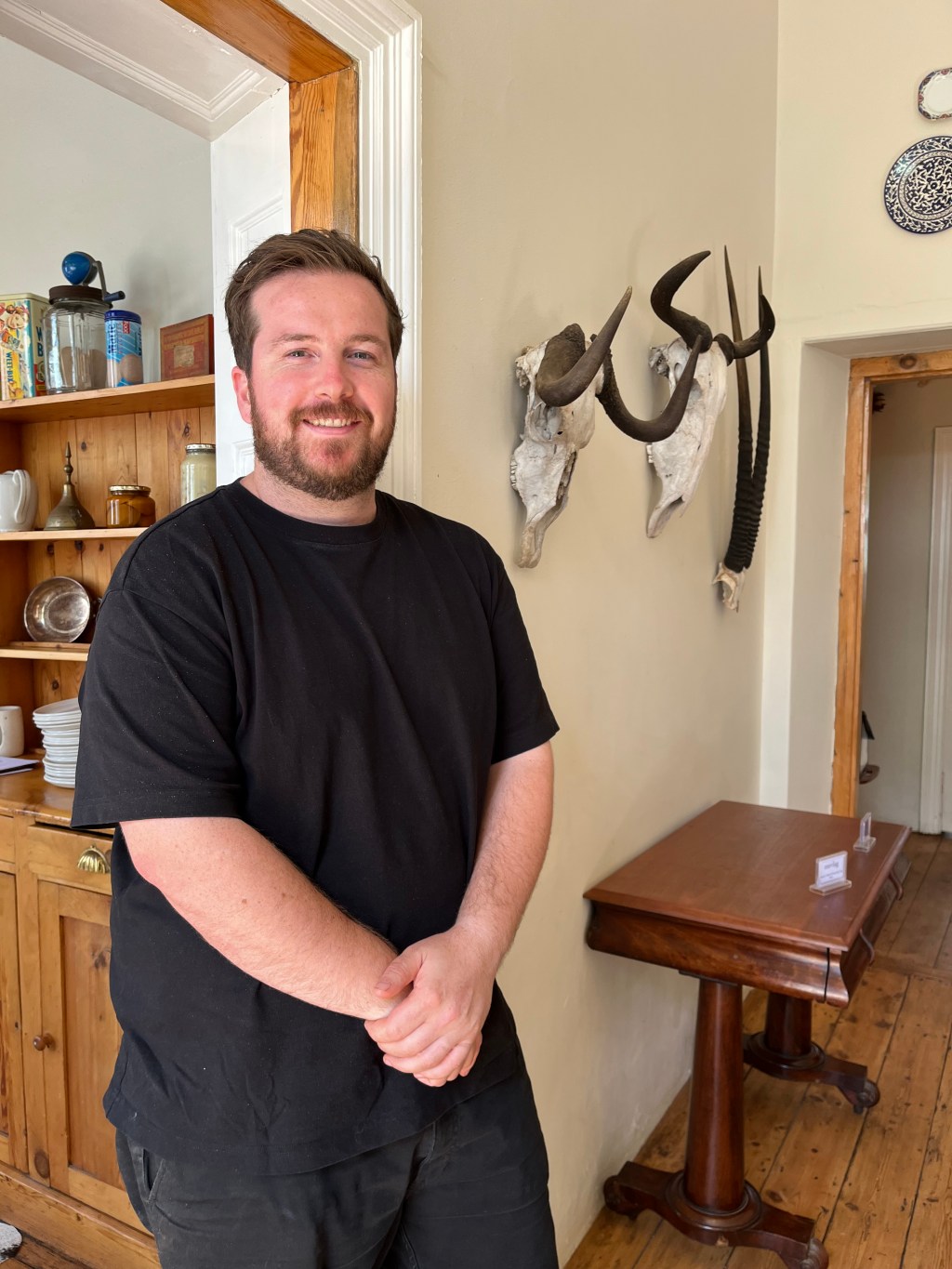
As you can tell, the wine had certainly made enough of an impression on me. I wanted to understand where the idea came from, how it was being made and, more importantly, meet the person currently responsible for it. That eventually led me to Meinert in Devon Valley and a long conversation with winemaker and general manager, Brendan Butler CWM (Cape Wine Master).
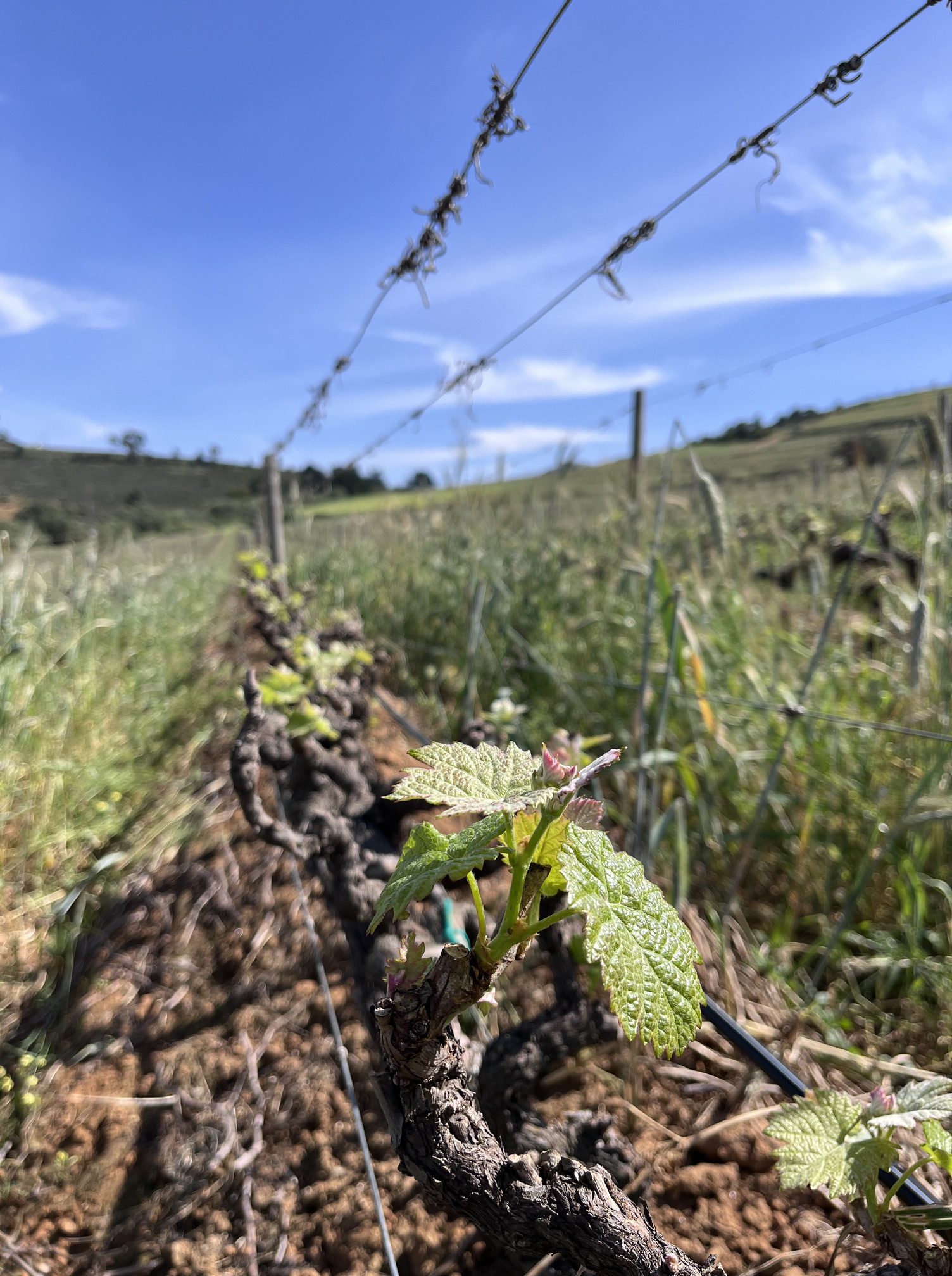
Brendan describes himself first and foremost as a wine farmer. As our conversation progressed, it became clear just how important the farming side of wine is to him.
Born and raised in Johannesburg, Brendan’s interest in wine started young and eventually led him to Elsenburg, where he graduated cum laude in 2008 with a B Agriculture degree majoring in Oenology and Viticulture. From there came four years at Jordan, followed by time at Nitida and Mount Vernon. He continued studying throughout, completing his Cape Wine Academy Diploma in 2011 and qualifying as a Cape Wine Master in 2017.
Interestingly, the overseas harvest that appears on so many South African winemakers’ CVs never happened. That was deliberate (which I admit is pretty badass)! While opportunities came along, Brendan was more interested in understanding the Cape. He wanted to know what its vineyards tasted like, how its different areas behaved and ultimately where he fitted into it. “What was the story behind it?” Brendan explained. “Ultimately I needed a place where I was going to set up roots”.
For Brendan, an overseas harvest would have provided only a snapshot. He wanted to understand what happens beyond those few intense weeks and, more importantly, the viticulture behind the finished wine. “That’s always been my fundamental core focus”, he said. “The viticulture”.
That interest in the wider Cape is reflected in Meinert’s vineyards and the wines being made from them, making it a particularly interesting fit for Brendan. Stellenbosch remains the home and heart of the business, with the cellar in Devon Valley and the majority of its vineyards planted in the region. The farm has Sémillon among its white varieties, alongside Pinotage, Shiraz, Merlot, Cabernet Franc, Cabernet Sauvignon and Petit Verdot.
Stellenbosch provides the “anchor”, but Meinert’s reach extends beyond it. The team also works with vineyards in the Swartland, Elgin and the Upper Hemel-en-Aarde Valley. Overall, this gives the brand an opportunity to explore the Cape Winelands through a single range of wines, while showing the regional and stylistic differences between the areas they work with.
The estate was established by Martin Meinert in Devon Valley, with commercial production beginning with the 1997 vintage. Brendan later joined Meinert as winemaker and general manager, but he has no interest in pretending the history of the place started when he arrived.
“I think a job well done is if you taste through time and it flows”, Brendan explained. “There should be a natural progression”. Also, rather than imposing his own ideology on the wines, he sees his responsibility as continuing what was already established and improving it where possible. “We’re custodians”, he said.
His approach in the cellar follows the same mindset. There is a serious focus on fruit selection, beginning in the vineyard and continuing through bunch and berry sorting. Cellar hygiene is another area where he admits to being particularly pedantic. If he can control fruit quality, sorting and cleanliness, he will.
Fermentations are allowed to start naturally rather than through inoculation with commercial yeast, although Brendan does inoculate for malolactic fermentation where he wants greater control over the bacteria involved. “I subscribe to the club that says we make our wines outside in the vineyard and nurture and raise them in the cellar”, he continued.
That doesn’t mean following minimal intervention simply for the sake of being able to say so. Wine still needs to be commercially sound, and Brendan is quite open about the financial reality behind producing it. Electricity, fuel, equipment and salaries all cost money. The romantic side of wine still exists, but the reality behind the bottle is considerably more complicated.
It feeds into something he would happily change about the way South African wine is marketed. “Drop the cheap”, Brendan said when I asked him what he would change. The familiar “cheap and cheerful” description of South African wine doesn’t sit particularly well with him. For a country producing wine at the level South Africa currently is, constantly leading the conversation with price can undoubtedly undermine what is actually in the bottle. We ended that part of the conversation with Brendan stating, “We’re a serious wine producing country and we must remember that”. Preach!
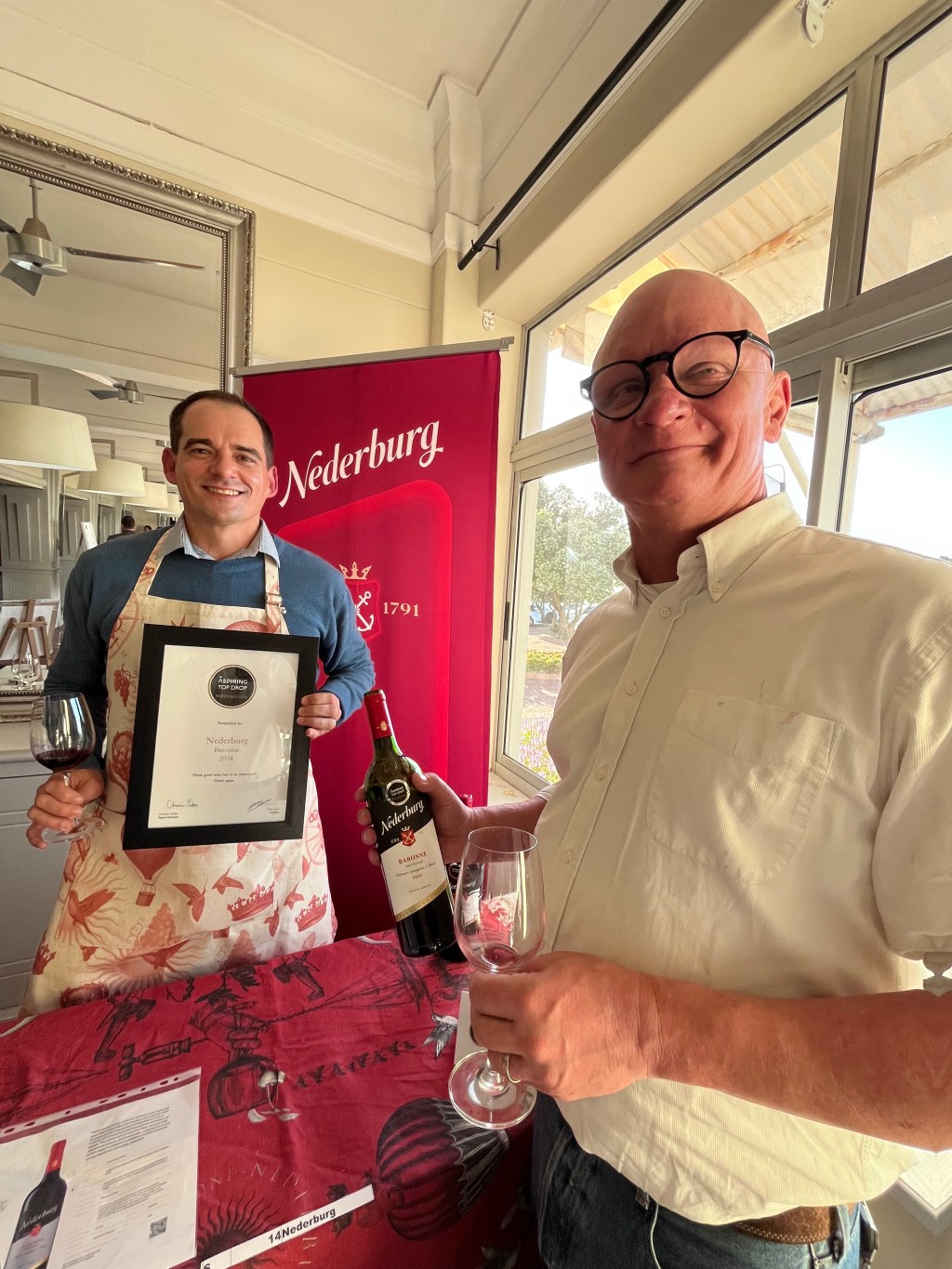
We also spoke about wine competitions and how much weight he gives them. Brendan judges wine himself and sees awards as one part of a much bigger picture rather than the final word on a wine. “It’s a subjective opinion”, he said.
At the end of the day, wine needs a story, a good team, people who can sell it and, depending on the market, perhaps a few stickers on the bottle too. Meinert is therefore selective about where its wines are entered. Brendan wants to understand the competition, the composition of its panels and what those judges are looking for.
More importantly, he believes strongly in blind tasting. The same rule applies when assessing his own barrels. If you know an expensive barrel is sitting in front of you, it’s very easy to want that barrel to perform well because it validates the decision to buy it. Bias exists, whether we like it or not. Blind tasting helps limit that and allows him to assess the wine on its own merits.
I can attest to this after recently sitting in as an associate judge for the Winemag Cabernet Sauvignon Spring Series Report. When you’re tasting blind, it really is just you and the wine. There’s no label, no reputation and no power of suggestion to influence your thinking. It comes down to your senses, your critical analysis and what’s actually in front of you. It’s pretty intense, but also a very special way to taste/experience wine.
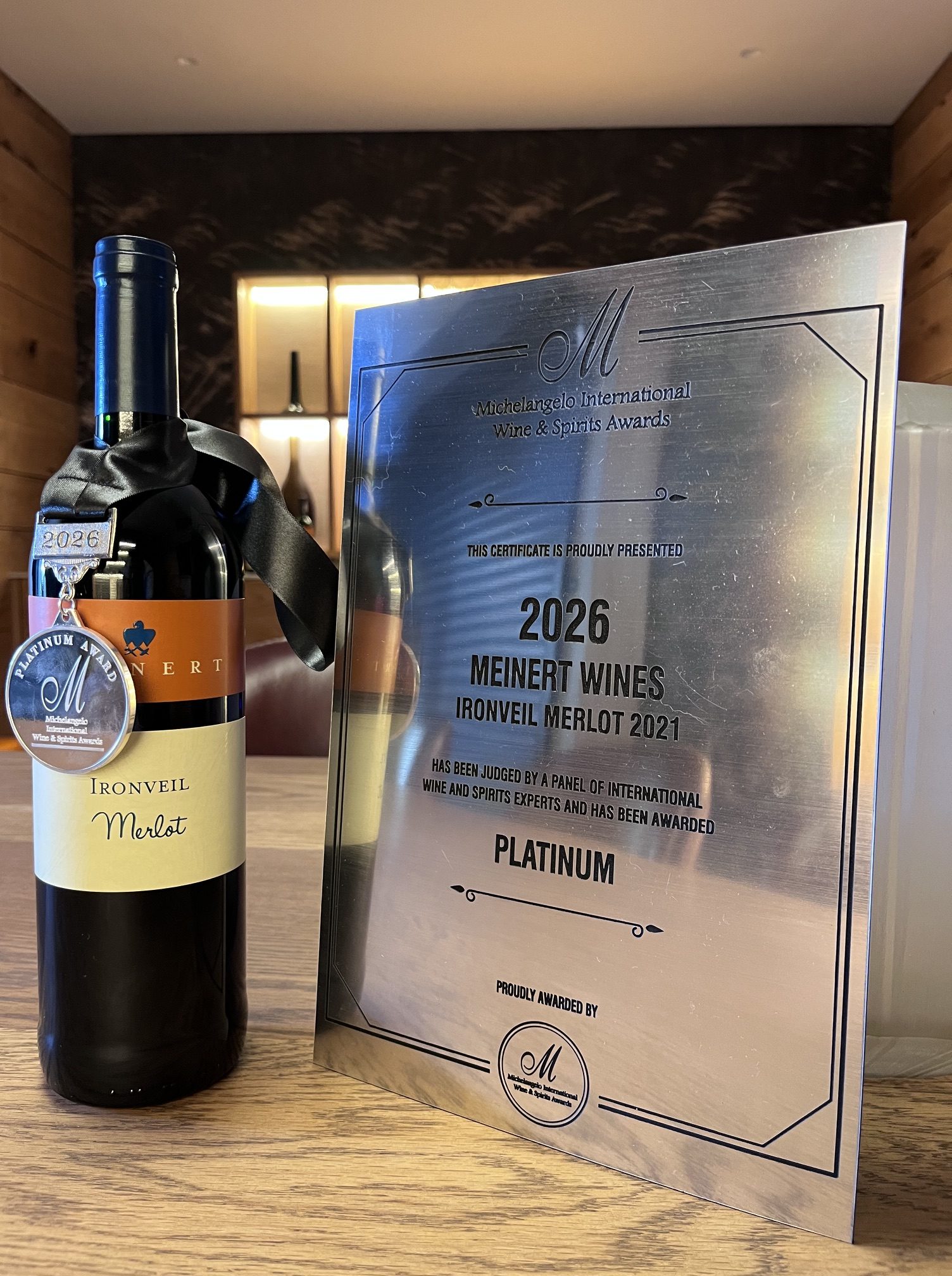
During our conversation, Brendan mentioned that the Meinert Ironveil Merlot 2021 had recently received Platinum at the Michelangelo International Wine and Spirits Awards, while the Printer’s Ink Pinotage 2019 received Double Gold. Congrats to both him and his team!
There’s no doubt Merlot is a variety Brendan has a soft spot for. According to him, “Merlot tends to play second act”. “I just love championing the underdog”! Well, Brendan, after tasting these wines, there is nothing under-doggish about them. You’ve given them a “bark” rather than just a “woof”!
If someone only had time for one red wine to understand what Meinert is trying to do, the Ironveil Merlot would be his choice. For a white, it would be The Italian Job.
FYI, the inspiration for The Italian Job came from Martin Meinert’s experience of white Merlot from Ticino in Switzerland. The connection goes a little further too, as The Italian Job is made from an Italian clone of Merlot planted on the Meinert property in 1989 (a vineyard as old as my fiancée)! Brendan sees their interpretation differently though. For him, its flavour profile speaks more clearly of Stellenbosch than Switzerland. Two very different expressions of the same grape, and a pretty convincing argument for giving Merlot a little more attention. I should’ve asked whether Martin ever took The Italian Job back to Ticino to show the winemakers there. I’d be interested to know what they made of it. Pretty cool, too, to think that a wine from that part of Switzerland ended up inspiring something all the way down here in Stellenbosch!
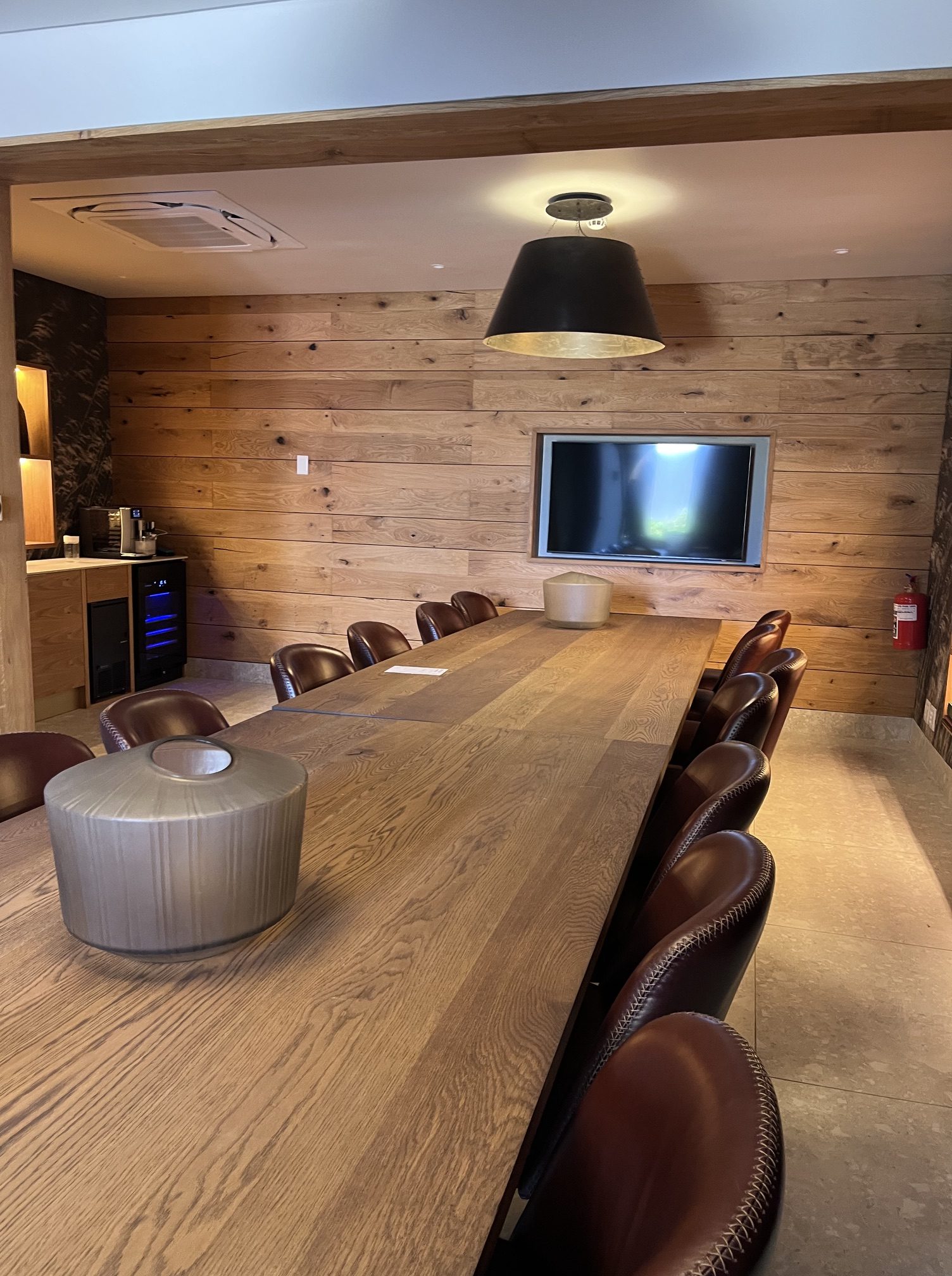
Meinert itself is changing too. When I first visited, the tasting area was still very much a construction site. That work has now resulted in a space centred around a long communal table rather than the usual tasting counter. Brendan used the Afrikaans term “kuier plek” when explaining what they wanted to achieve. “This is a long table where people gather”. In doing so, Meinert has created a proper brand home, and importantly, another reason for people to visit the farm.
For the time being, tastings are by appointment and can be arranged directly with Meinert. Click here to experience the Meinert magic for yourself!
The idea is family and friends rather than having someone standing on one side of a counter pouring wine for somebody on the other. That sense of family extends to the people making the wines. Meinert’s foreman, for example, has been on the farm for more than three decades, and Brendan repeatedly came back to the fact that winemaking can’t be reduced to one person. “There’s one guy that goes up onto the stage if you get an award”, he said, “but it’s certainly not one man’s job”.
Perhaps that’s also why he seems uncomfortable with the idea of legacy. When I asked what he’d want somebody opening a bottle of Meinert twenty years from now to think about, the answer was not Brendan Butler. He’d rather the wine tell them something about Meinert, its vineyards and the particular period in which it was made.
“I’m the custodian. I’m just part of a team”.
That probably says more about Brendan’s approach to Meinert than anything else. He’s not trying to tell his own story or rewrite what came before, but rather understand it, look after it and hopefully leave it in an even better place for whoever comes next.
Yeah, I’m a fan.
Buy their wines here.





Leave a Reply