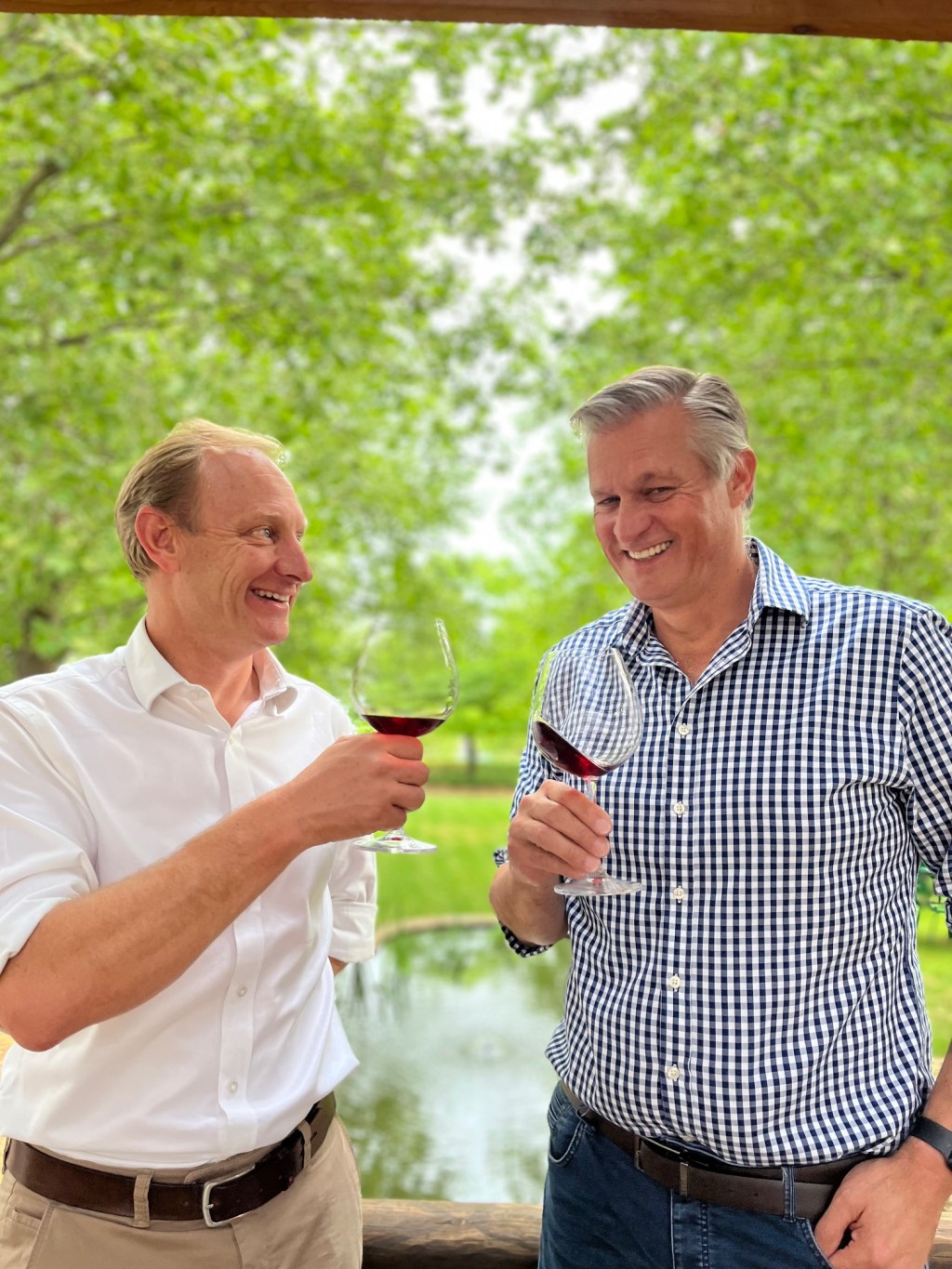
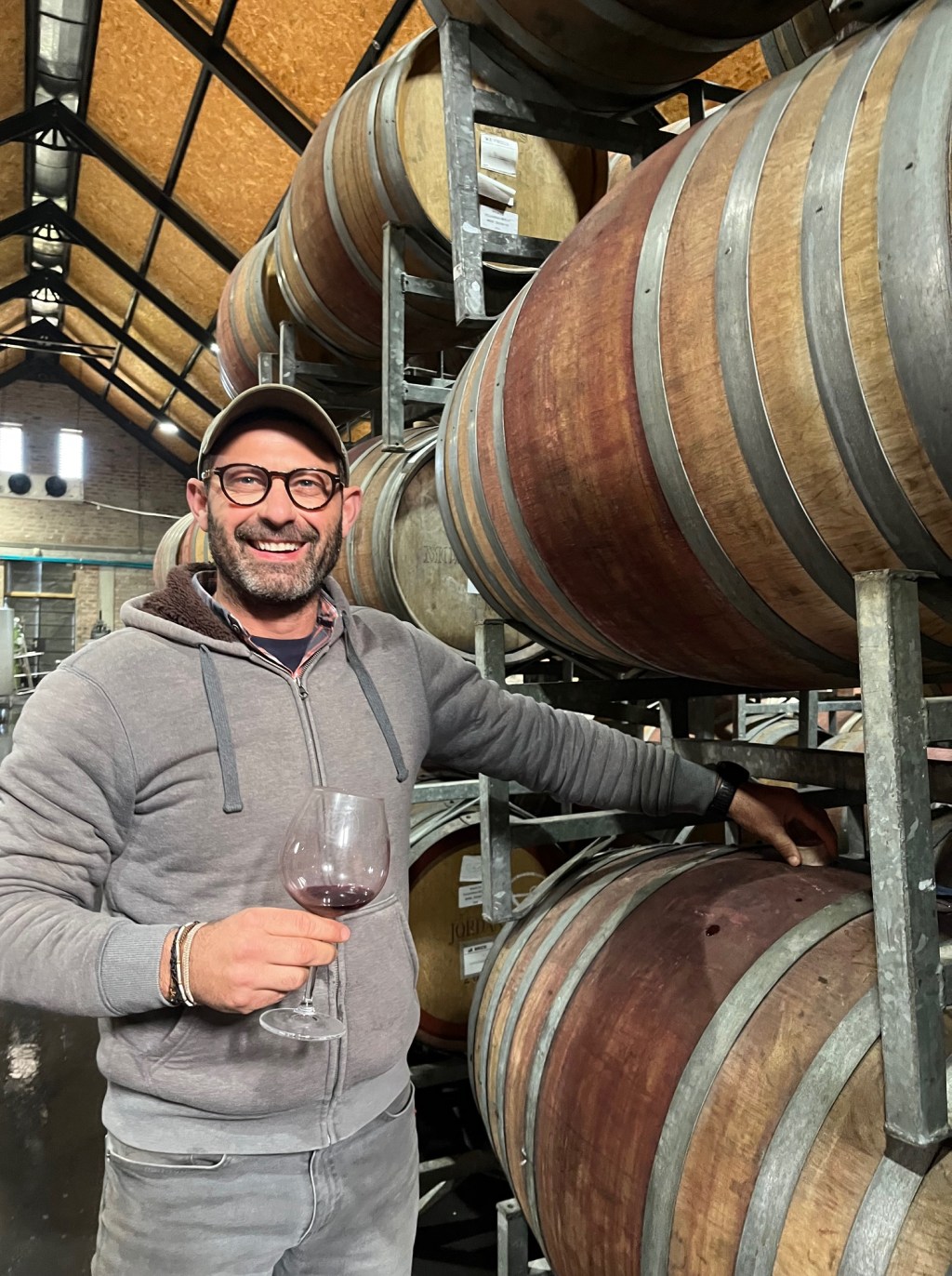
Very few South African winemakers embody patience and place quite like Andries Burger, whose thirty years of quiet dedication at Paul Clüver Wines has reflected the growth and maturation of the Elgin Valley. He joined the family in 1997, when the winery was built on the Clüver estate, and has since guided it from experimental cool-climate pioneer to a global benchmark for Chardonnay and Pinot Noir.
Andries’s journey into wine began unexpectedly. He grew up in Paarl and first considered veterinary science before turning to viticulture at Stellenbosch University. Everything changed after a tutored tasting with his class. “That first formal tasting lit something inside me”, he recalled. “I realised this is what I wanted, or rather, needed to do”!
After completing harvests at Thelema Mountain Vineyards and working under the legendary Paul Pontallier at Château Margaux, Andries joined the Clüver family and has remained at the Elgin estate ever since. Seems he loved it so much, he married into the family!
Through decades of close observation, he’s developed an almost instinctive feel for the vineyards. “You only really get to know a site after ten or so years”, he said. “You learn which block flowers first, which one stresses sooner, how the soils breathe”.
This deep familiarity has shaped his overall winemaking philosophy. “At first, we tried to make big, oaky wines. We felt me needed to make a statement”, he admitted. “Then we pulled back too far. Eventually, you find balance, and you realise that great wine should whisper, not shout”.
Not many people will know this, but it was in the early 2000s when Paul Clüver first began developing what would become its flagship label, Seven Flags. The idea was initially for a Bordeaux-style blend. However, and thankfully for all of us, a visit from Paul Pontallier shifted everything…
“He tasted our barrels and said, ‘Why make Bordeaux when your best wines are Pinot Noir?’” Andries said with a smile.
Elgin’s soils and cool coastal influence proved better suited to elegance than weight. The estate refocused on Pinot Noir and Chardonnay, a decision that would help define both Paul Clüver and Elgin as leaders in cool-climate winemaking.
The newest Seven Flags releases/vintages, Chardonnay 2024 and Pinot Noir 2023, are the clearest reflection of that sustained dedication.
The 2024 Chardonnay was shaped by a generous winter rainfall, a dramatic September flood, and an unusual January heatwave. “It’s a little more yellow-fruited this year”, Andries said. “But the cool nights kept that clean line of acidity”.
I can all recall how heavy those rains actually were. When visiting the farm, you’ll see the “scarring” on the mountains. Apparently even a forklift washed away – which is still yet to be found!
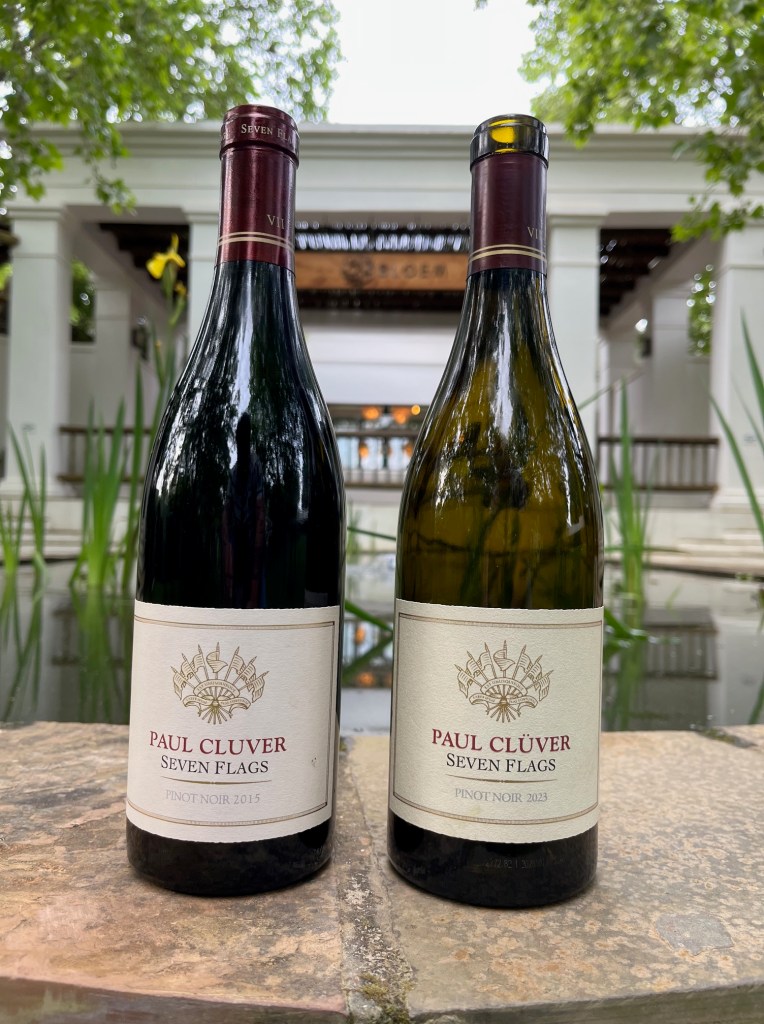
The 2023 Pinot Noir came from a more demanding season marked by late rain and difficult picking decisions. “We removed 5% of the fruit instead of 1%”, he explained. “But what went to barrel was pure, delicate and linear, creating a wine built to last”.
I can only imagine how well this wine will develop over time. I was fortunate enough to taste the 2015 vintage of the Seven Flags Pinot Noir. There are no words to explain how ridiculously amazing, and well structured, that wine was. The PN drinks incredibly well now, of course, but if you’re patient enough, this wine will show you a little piece of heaven.
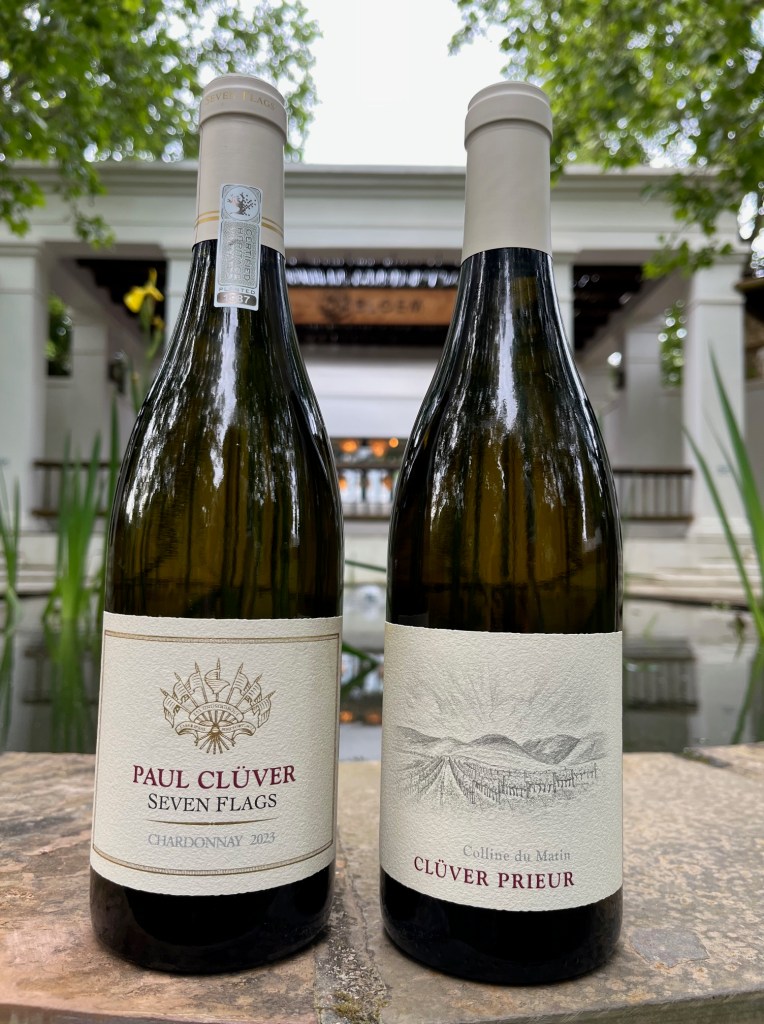
Andries travels regularly to Burgundy, not to copy style but to learn from its approach to precision and place. Those visits inspired the collaborative Colline du Matin Chardonnay, created with Martin Prieur of Domaine Jacques Prieur. Named for the morning light that first touches its slope, the wine was launched after pandemic delays and has already earned major international praise.
The Seven Flags Chardonnay comes from two adjoining vineyard parcels first planted in 1987, both part of the estate’s original Old Vine Project blocks. Set on decomposed Bokkeveld shale with pockets of gravel and deep-rooted vines, the site has always stood apart for its quiet concentration and balance. Each year the barrels are tasted blind, and the same question guides the final selection, “If you had to replant this vineyard, would you plant Chardonnay here again”? For these blocks, Andries said, the answer remains an emphatic yes! Over time, as virus pressure led to replanting on slightly cooler slopes, the wine has only gained in refinement, producing a Chardonnay defined by length, subtlety and calm precision rather than power.
By contrast, the Colline du Matin Chardonnay comes from a different slope altogether, a block that catches the first light of day through a break in the mountain. Its name, French for “morning hill”, reflects both its orientation and its partnership with Burgundy’s Martin Prieur. First produced in 2011, and first bottled from the 2019 harvest, the project follows the same philosophy as Seven Flags – assembled from blind tastings of select barrels and bottled only when both winemakers agree it has reached its ideal expression. Where Seven Flags is textural and composed, Colline du Matin shows brighter acidity and early-morning energy, two distinct but connected reflections of Elgin’s cool precision.
“Same philosophy”, said Andries. “Different site, same pursuit of precision”.
Behind the scenes, Paul Clüver continues to refine its viticulture. The estate employs drone and infrared canopy mapping to monitor vine health, and works with Italian pruning specialists Simonit & Sirch to extend vine longevity and uniformity.
“Traditional pruning meant vines died after about 25 years”, Andries noted. “We’re changing that. We want them to reach 40 or 50”.
Sustainability, he added, extends beyond the vineyard. “Looking after the environment and the people is part of the same responsibility”.
Elgin’s wines are now recognised alongside some of the best cool-climate examples globally. “Our Chardonnays can sit with the best in the world”, Andries said. “The challenge is perception. To be seen as world-class, not just great value”.
He describes Elgin’s Pinot Noirs as finer-boned than those from Hemel-en-Aarde, each valley revealing a distinct personality. That diversity, he believes, is what gives South African wine its strength.
“A great wine is like a first date”, Andries said with a cheeky smile. “You just know there’s more to discover”.
After nearly thirty years at Paul Clüver, Andries Burger still listens closely to his vines. With the 2024 Chardonnay and 2023 Pinot Noir, the Seven Flags range captures Elgin’s understated confidence with wines that are cool, finely detailed, and unquestionably site-driven.
Why the name Seven Flags you wonder? Andries explained it quite simply, “The name comes from the Clüver family crest which has seven flags on it. And, when everything comes together, or goes well, we like to say that we’re flying all seven flags”.
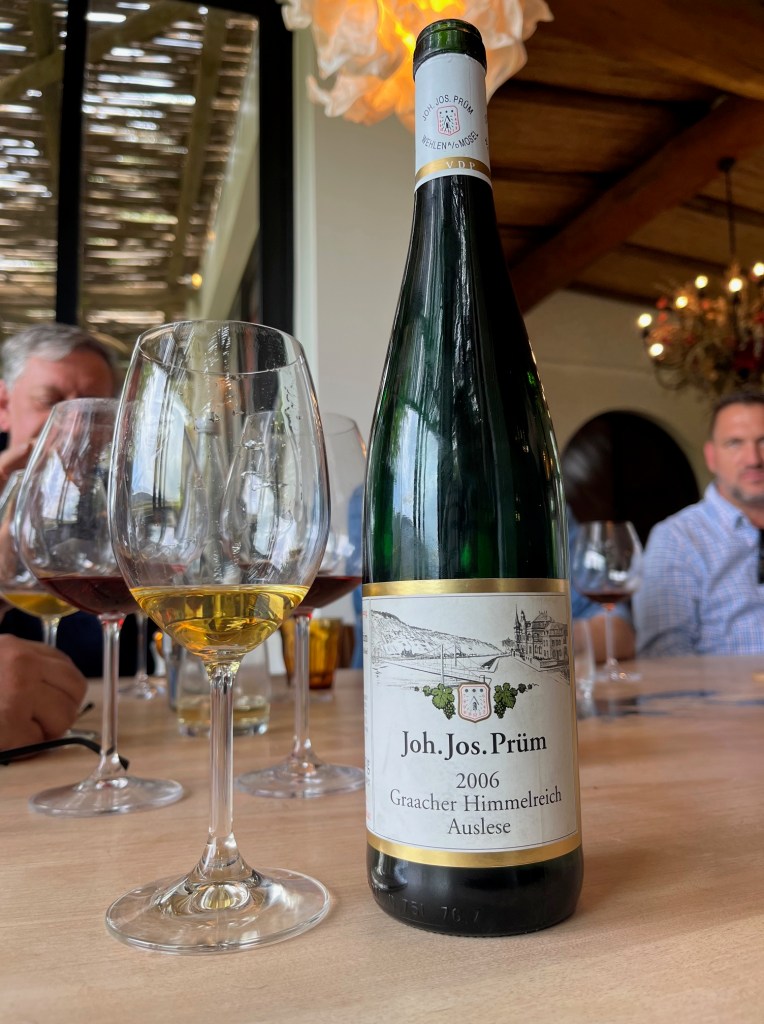
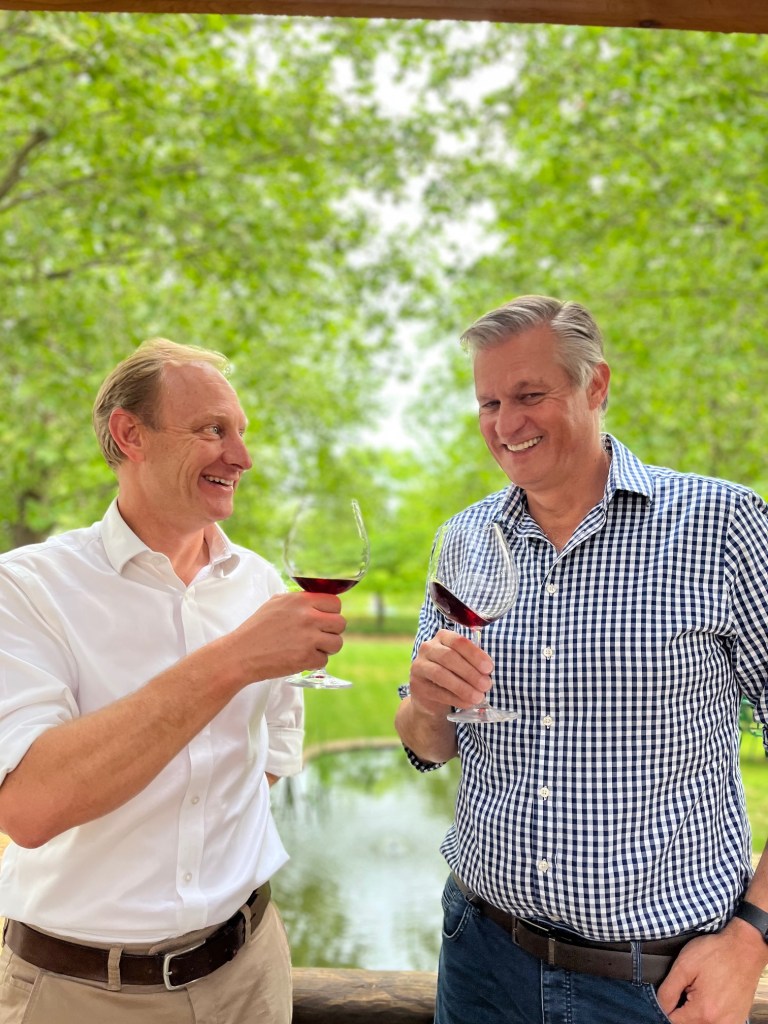
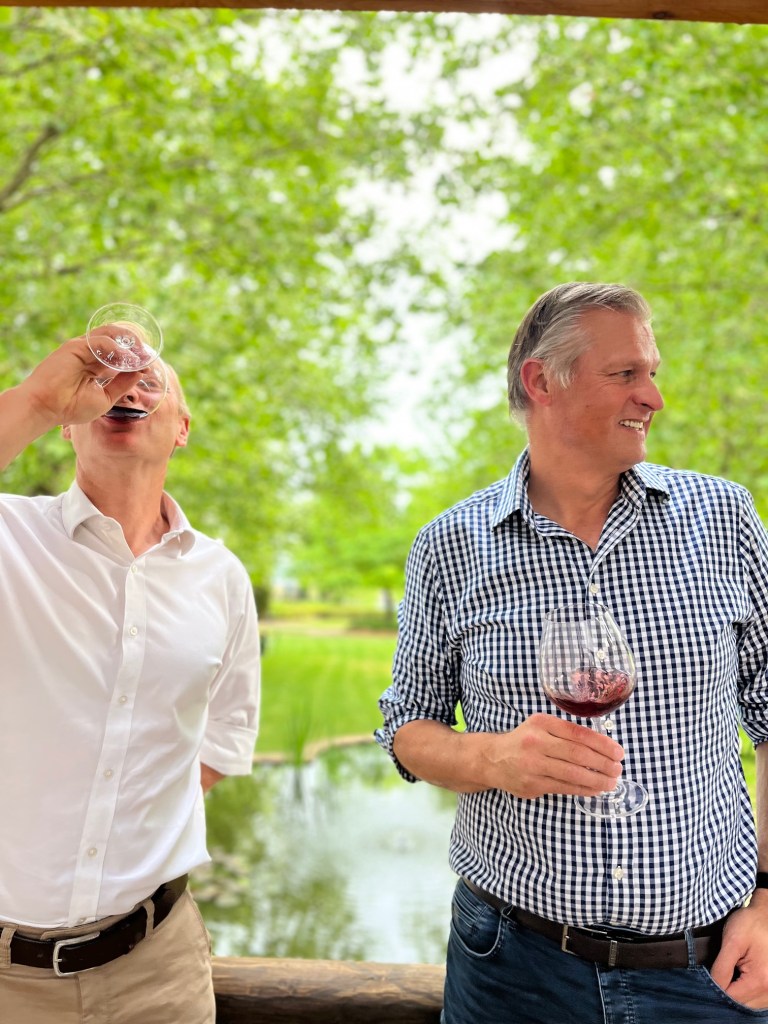
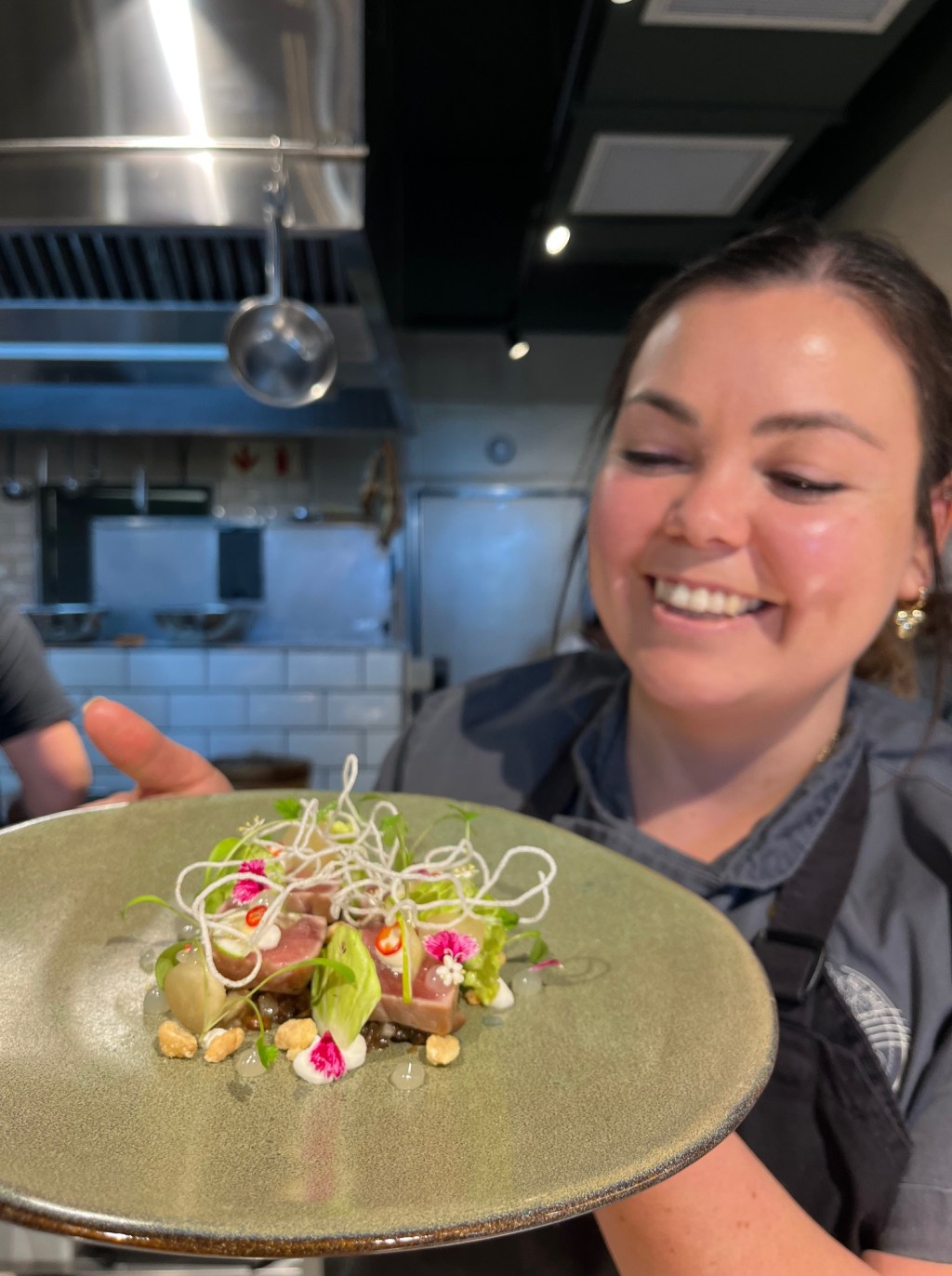
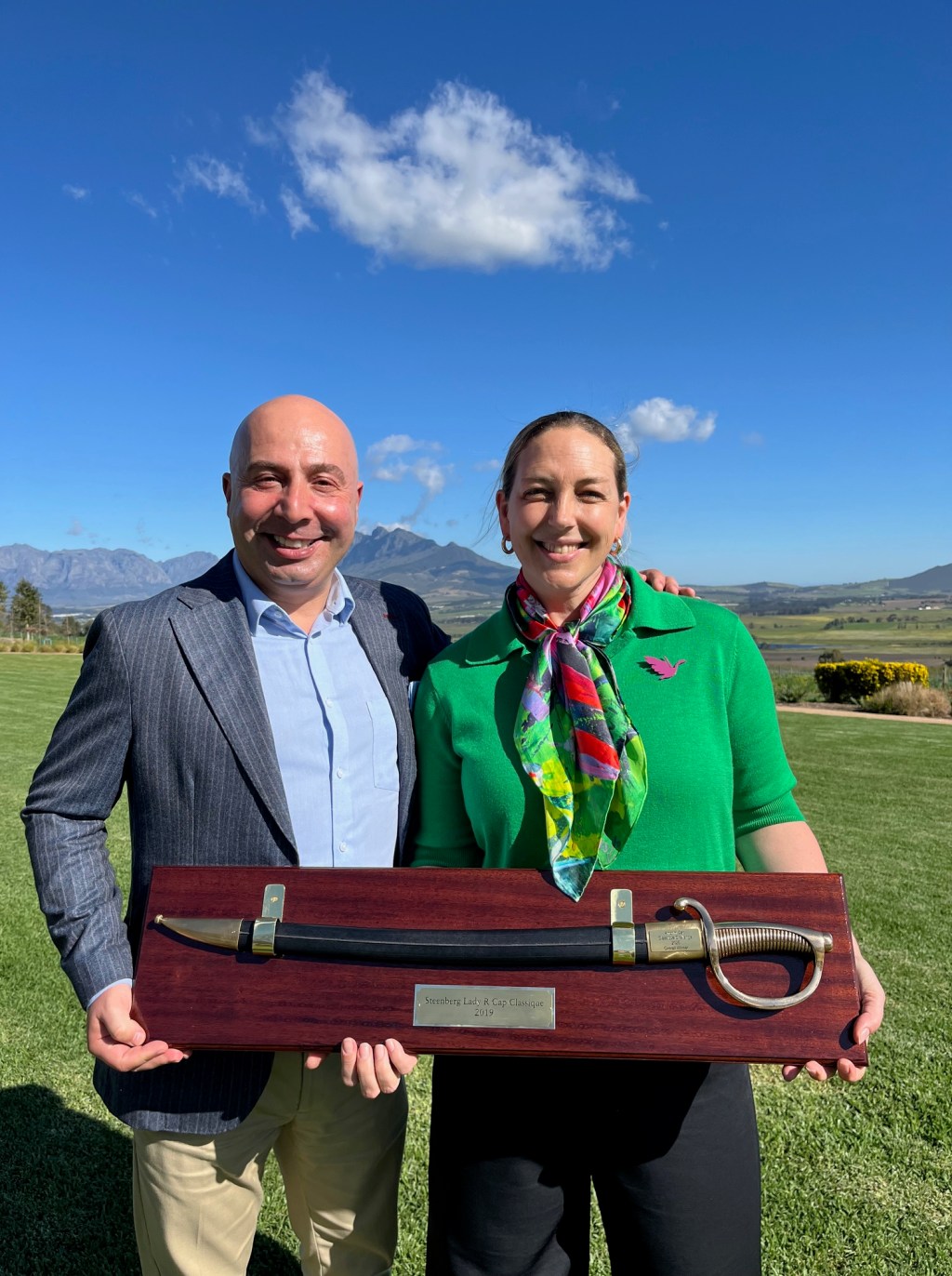
What I honestly enjoy about this seriously iconic brand is that, while they are winemaking pioneers, they remain focused, humble, and real. By real I mean, still own a personality! When taking these pictures, Paul Clüver Jnr shouted the word “sex” rather than “cheese” to draw that a million dollar smile of his! Also, once lunch was done at the fabulous Bloem Restaurant by Bertus Basson, Paul kept on with the spoils, treating us to a 2006 Auslese from Mosel.
It was a fun day out, thats for sure!
Buy the wines here.


 WINE, FOOD, AND EVERYTHING THAT'S GOOD!
Leave a Reply