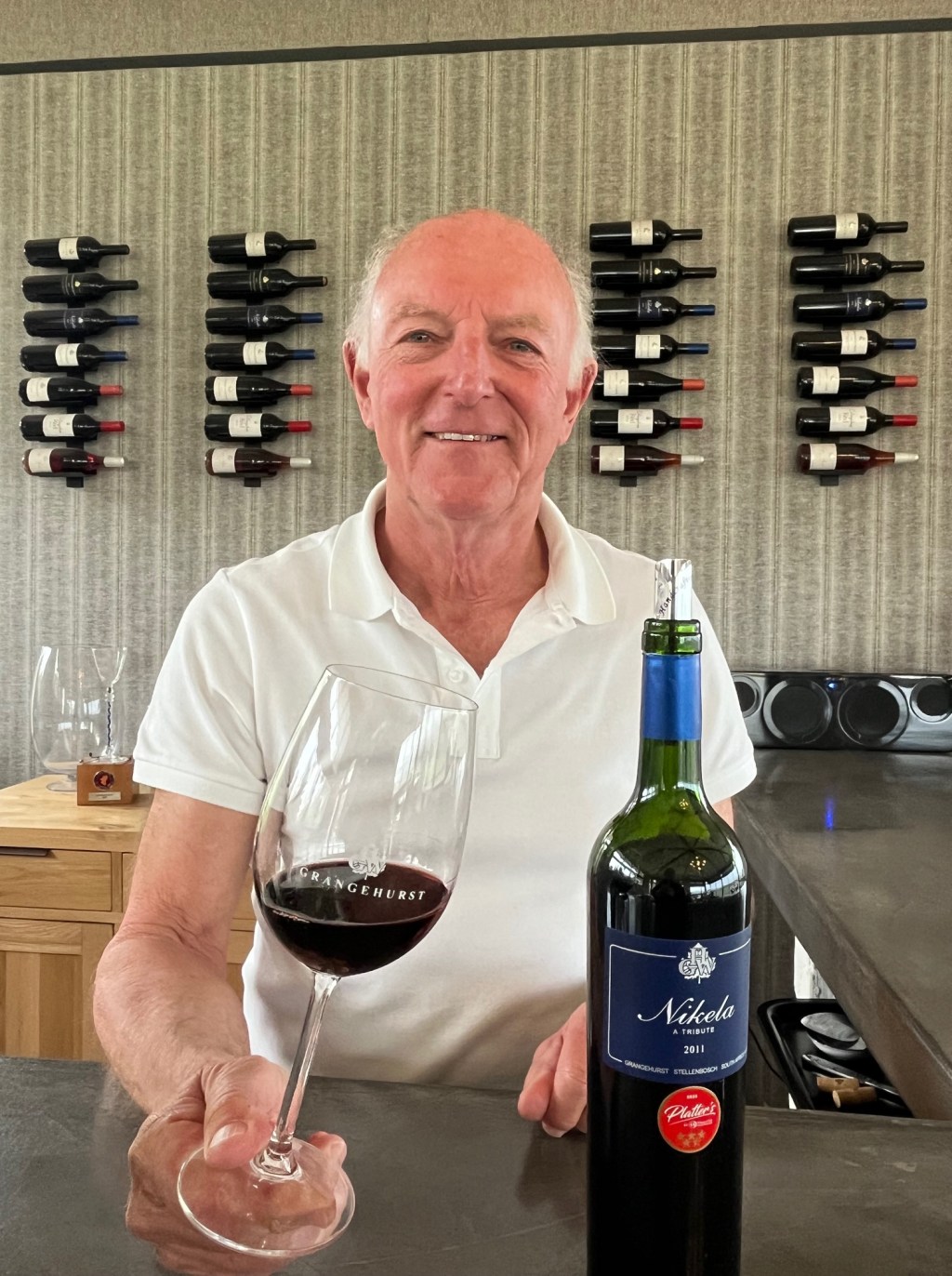
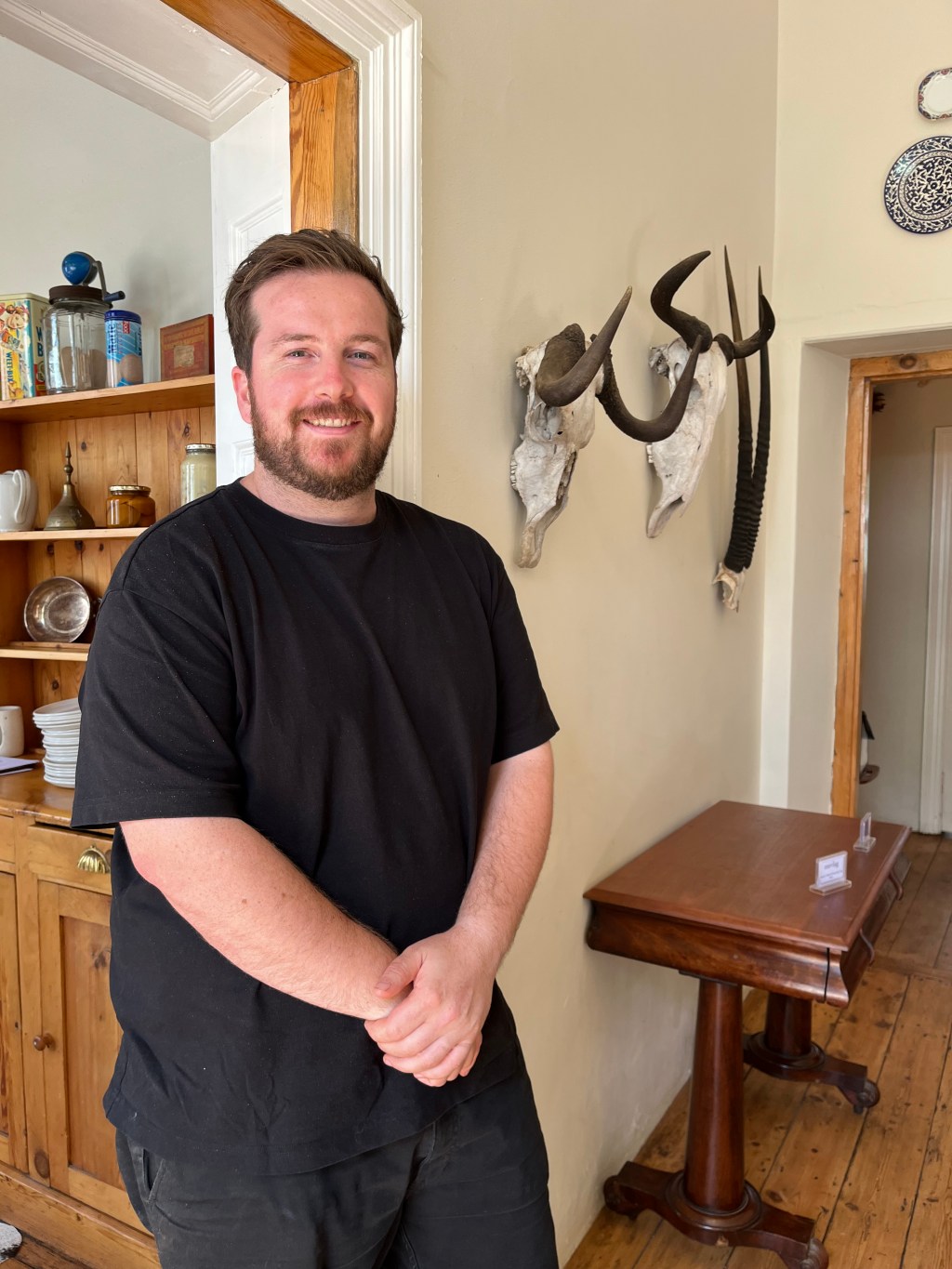
“Handcrafted, traditional, unhurried”. It’s more than a fancy, carefully considered marketing line for Jeremy Walker of Grangehurst, it’s the DNA of his winery on the slopes of Stellenbosch’s Helderberg. Since 1992, when he converted his family’s squash court into a working cellar, Jeremy has practiced patience, classical methods, and an unchanged, uniquely Grangehurst house style.
Jeremy’s formative years were spent at Bertram’s in the late 1970s, where red wine was fermented in open cement tanks, without modern temperature controls or quick fixes. Later, at Clos Malverne, he helped install similar fermenters, working gruelling shifts to punch down the cap every three hours around the clock. “They didn’t have any barrel maturation in those days, it was big old 3000 – 4000 litre casks”, he recalled. Seems winemaking back then wasn’t for the faint-hearted, a 24 hour a day affair, which pushed winemakers to their limits!
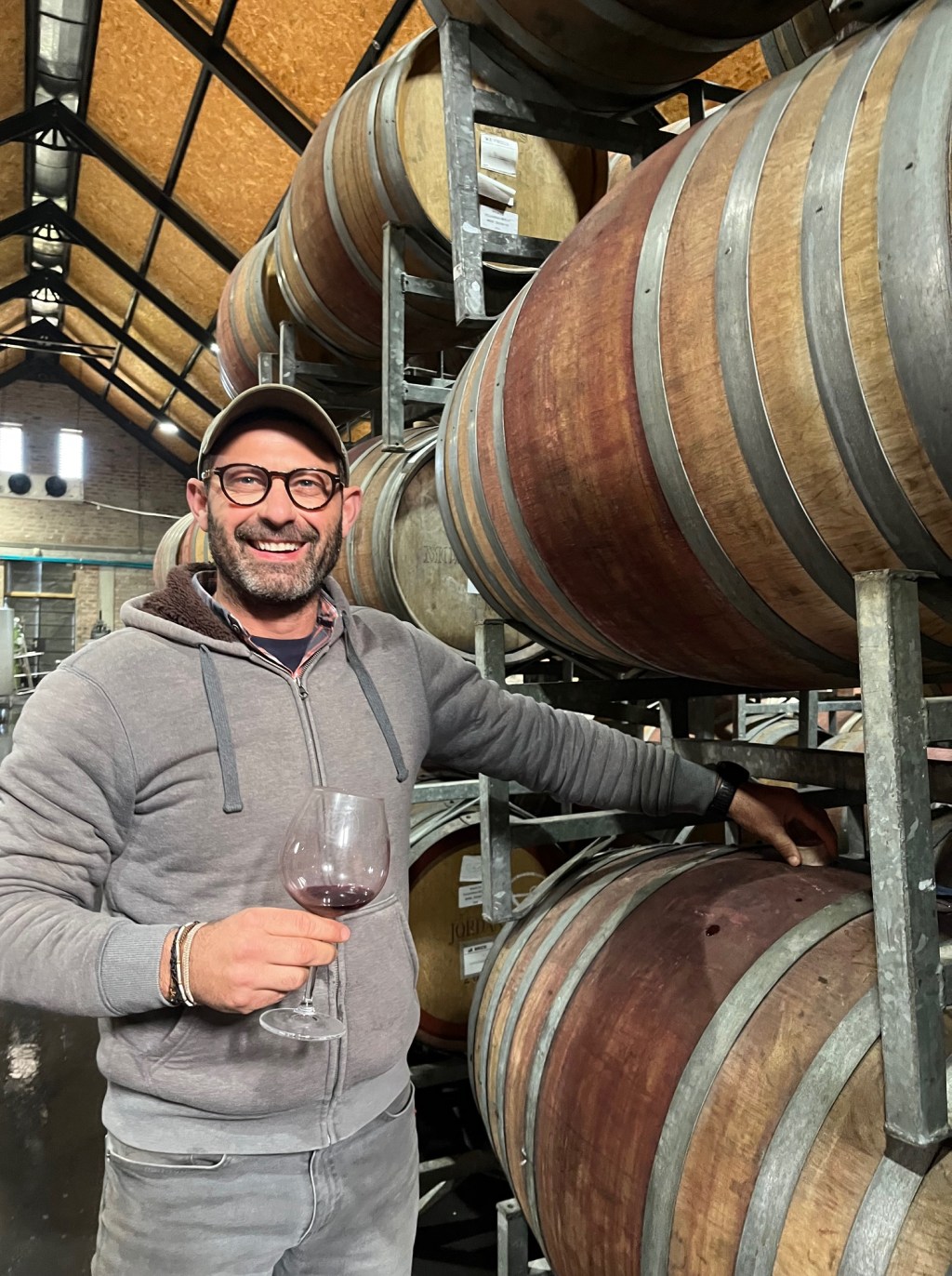
Those traditional methods remain the foundation of Grangehurst. Fermentations still take place in open-top tanks, punch-downs are done six to eight times a day by hand, pressing happens via wooden baskets, and bottling and labelling remain largely manual. “We’ve got some machinery”, Jeremy admitted, “but the core remains traditional”.
If there’s one thing that has changed over the years (in regards to winemaking/practices that have made an impact on his wines), it’s grape ripeness. In the early years, Grangehurst harvested at 22 – 23°B, making reds of 11 – 12% alcohol (Balling, a density scale, is used for measuring sugar content in water-based solutions). These wines were elegant when young but began to fade after a decade or longer. Learning from experience, Jeremy now harvests riper, averaging 13.5 – 14.5%, to avoid greenness and to give the wines more weight and structure. And structure these wines have! They are big, bold, and made to get old! Seriously, the concentration, the power, and the layered complexity of the Grangehurst wines completely blew me away.
While the early wines sometimes tired after twelve or so years, vintages like 1995 are still thriving today. “I want people to buy a bottle and drink it tonight”, he explained, “but also know it will still be good in 20 years. In fact, we’ll open a few ’95s this year for my daughter’s 30th birthday”! Jeremy, are we invited?!
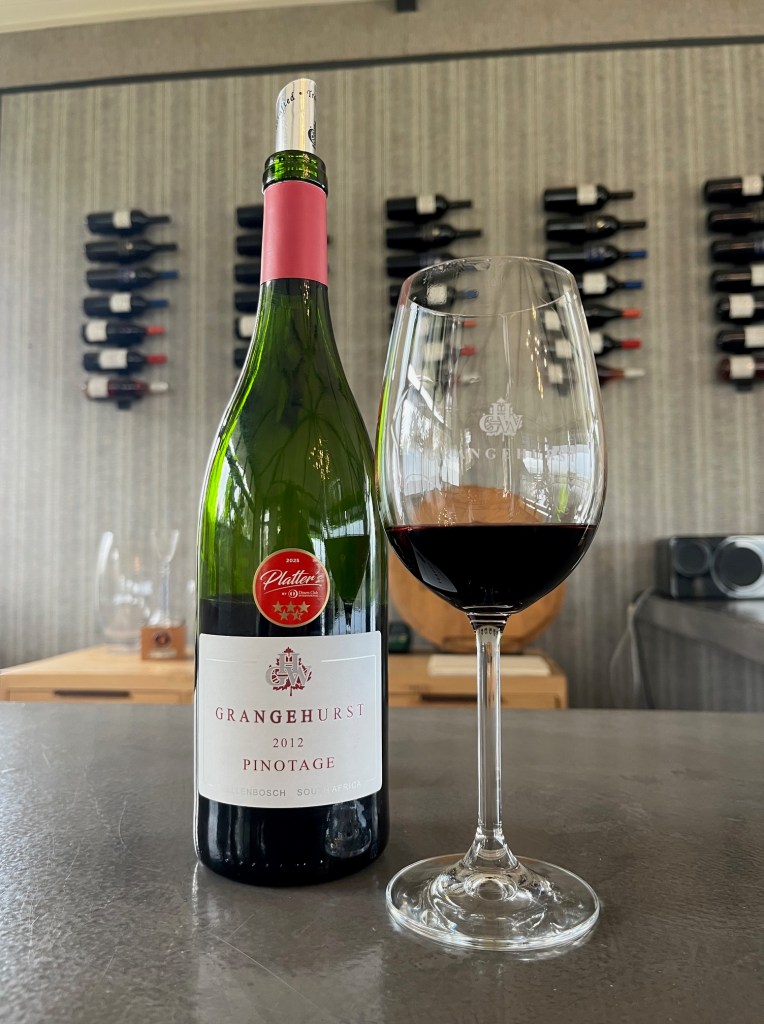
Few winemakers have done more to quietly prove Pinotage’s potential. He has worked with Pinotage since his student days, and it has become central to Grangehurst. In 1989, at Clos Malvern, he convinced the owner to buy barrels for a batch of Pinotage grapes purchased from a neighbour. “The wine was incredible, and it showed me what Pinotage was capable of”. That enthusiasm and forward-thinking never left. Always thinking of how to better develop a wine/cultivar which truly moves him. Jeremy literally gives us a small part of his soul through every bottle of wine he produces.
At Grangehurst, Pinotage is savoury and structured, not jammy or overly fruity. Over time, it develops spice and Rhône-like depth. He recalls a British critic who famously disliked Pinotage being poured the 1995 blind…he mistook it for a Rhône red! “That was unbelievably satisfying”, Jeremy confessed with a smile.
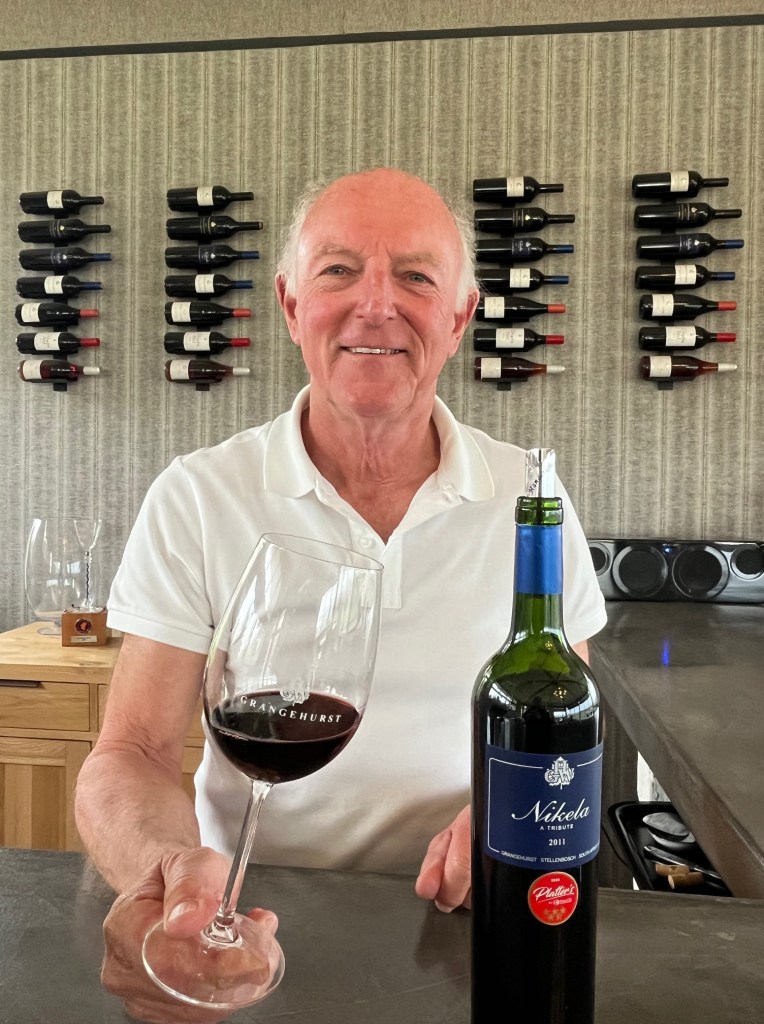
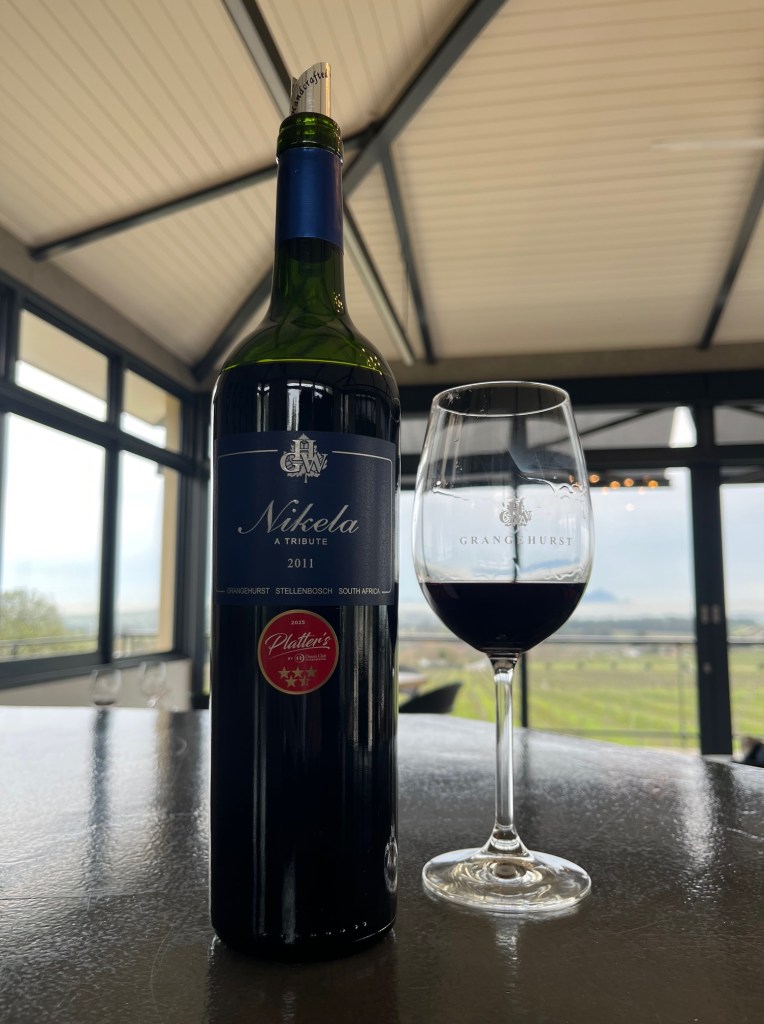
If one wine defines Grangehurst, it has got to be the Nikela. Created in 1997 as a tribute to Jeremy’s parents, who sadly passed away that same year. The name came from consulting UNISA’s African Languages Department. They suggested words from the indigenous languages, and he explained, “The one they said was the most significant was, it was spelt Nikela, but actually pronounced Nigela. The K is like a soft G in Xhosa and Zulu. So, it’s actually Nigela. And, Nigela means to give. It’s basically the words, “give, tribute, dedication, respect to your ancestors”. A truly meaningful, and beautiful gesture.
The first vintage of Nikela blended Cabernet Sauvignon, Pinotage, and Merlot. From 2002, Shiraz was introduced after blending trials showed it enhanced Pinotage’s strengths. More recently, a touch of Roobernet (crossing Cabernet Sauvignon and Alicante Bouschet, another proudly SA cultivar) has been added, which has deepened the colour and refined the wine’s tannin structure. Pinotage remains at least 30 – 35% of the blend, ensuring a distinctly South African identity.
Each variety plays its role. Cabernet contributes cassis, violets, and firm tannins, Pinotage adds red fruit and earthiness, Shiraz lends spice and warmth, and Roobernet brings even more depth. Even very small percentages matter. “Two percent can change everything”, Jeremy noted. “The difference between apes and humans is only 2.5% DNA”. Definitely a fact I wasn’t aware of! Explains that caveman instinct I develop after tucking into a few glasses of vino.
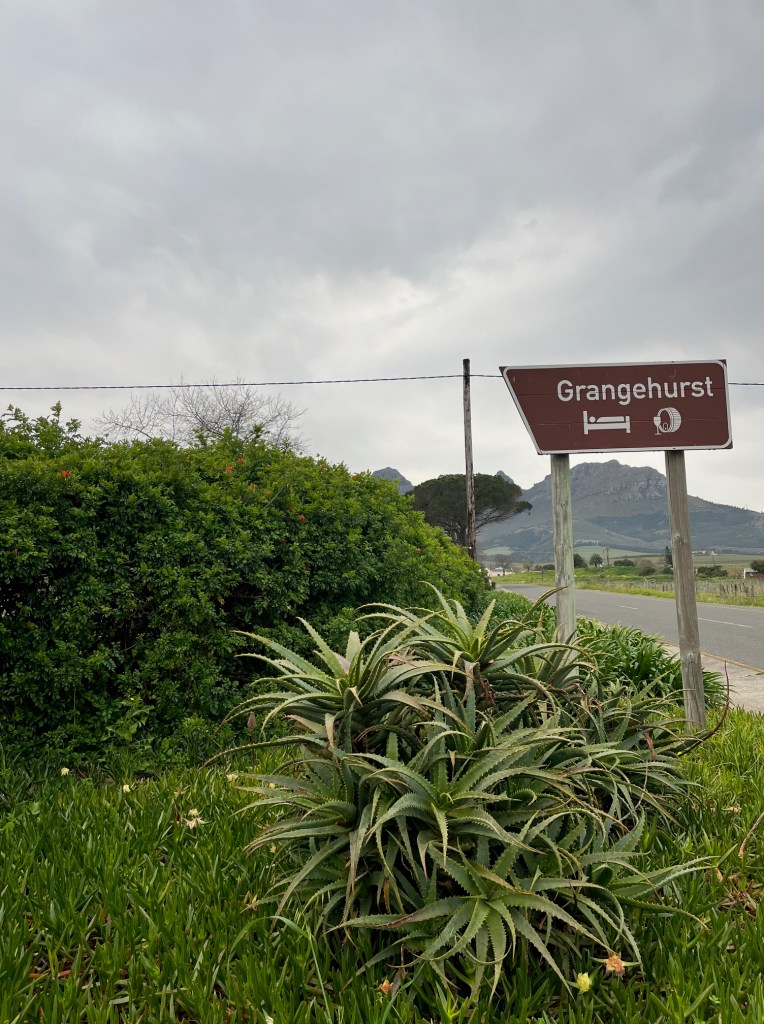
Though based on the Helderberg, Grangehurst is not a wine estate in the traditional sense. The family property is a smallholding with no vineyards, so grapes are sourced from trusted growers. He sees this as a strength, not a limitation, giving him freedom to select from only the best sites. “Neil Ellis encouraged me to do this”, Jeremey revealed. “It meant I could start producing straight away, without huge investment in land”.
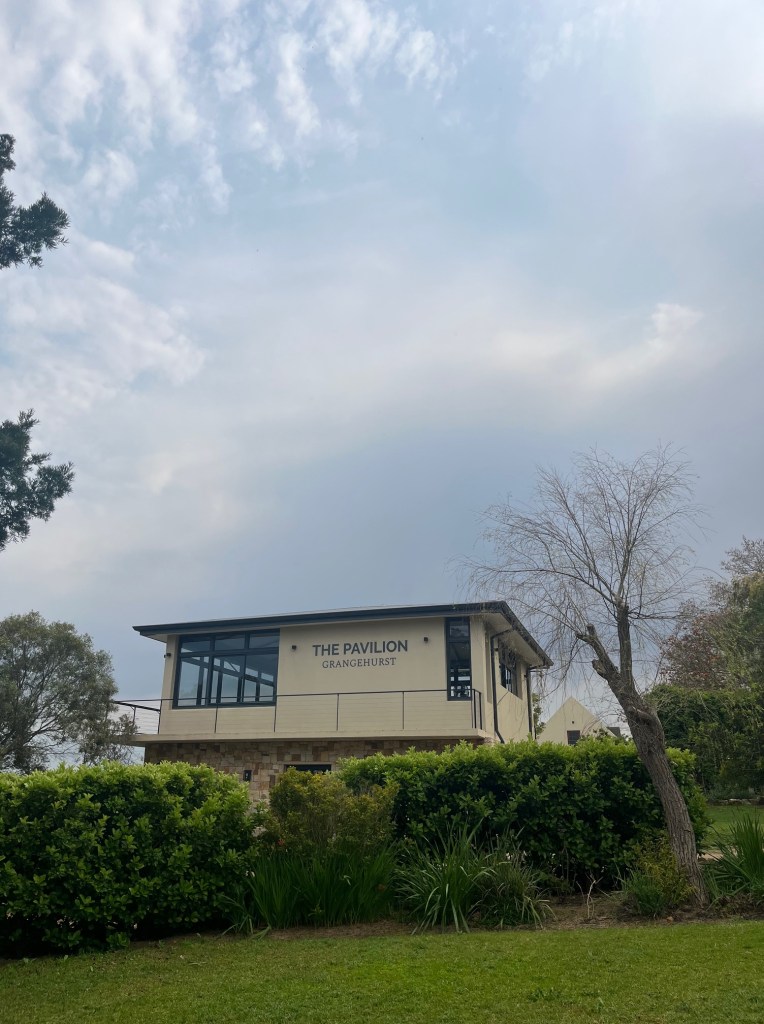
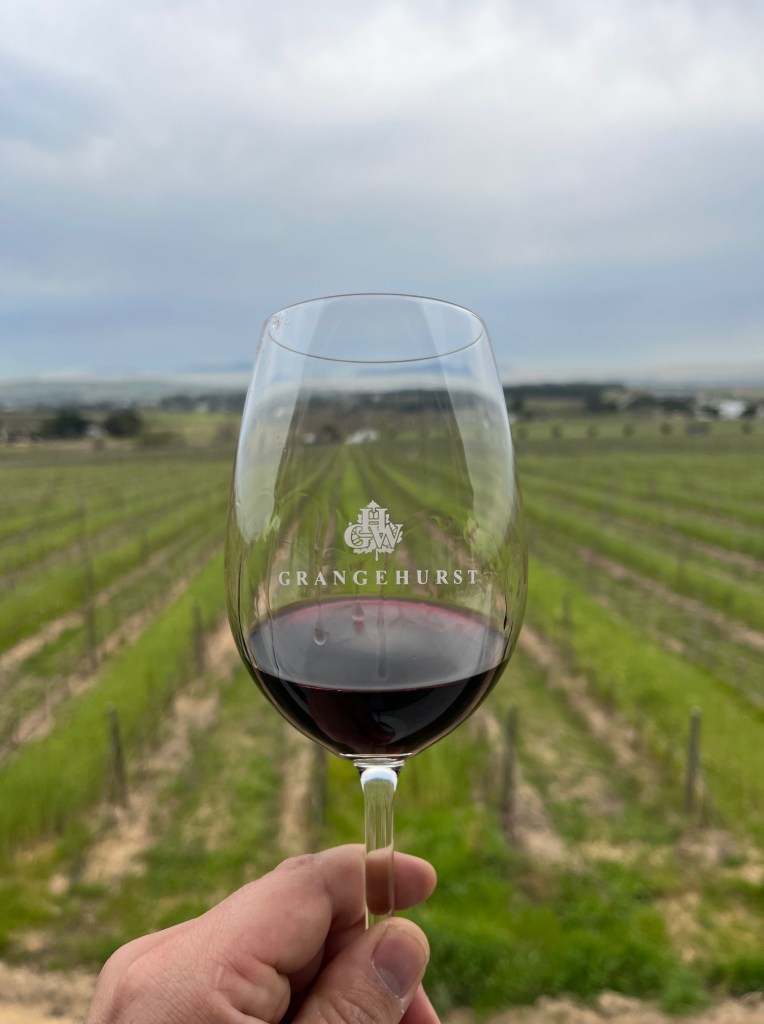
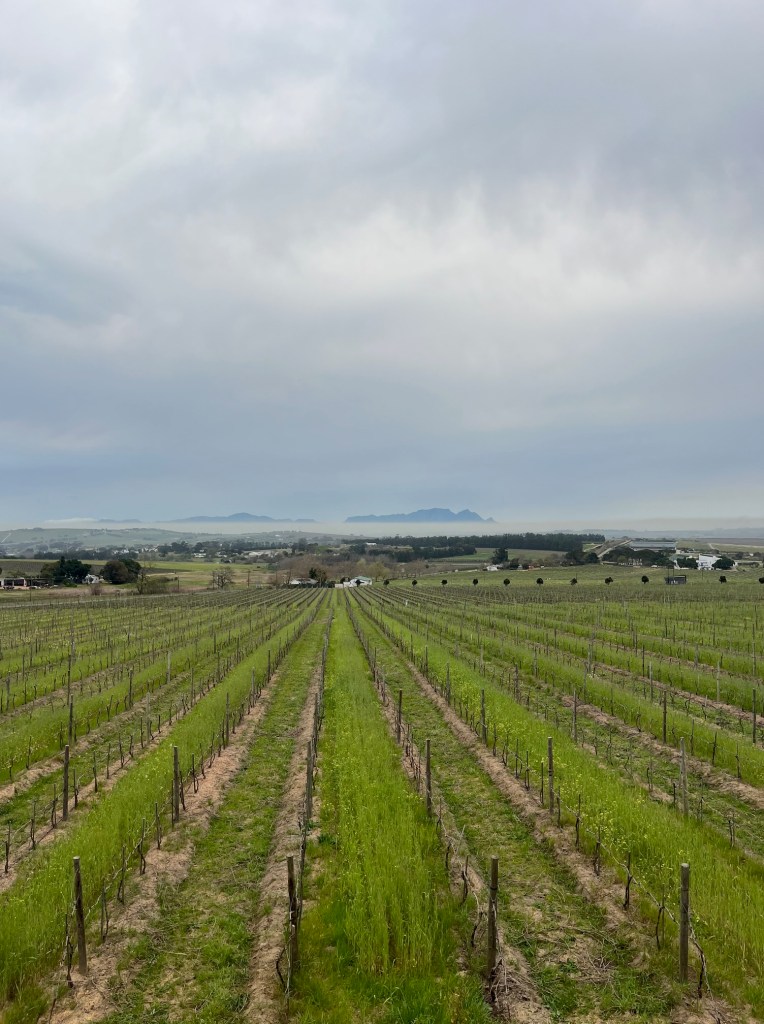
Visitors today taste in The Pavilion, a double-storey structure rebuilt on the footprint of the family’s old tennis court. “My parents loved tennis”, Jeremy recalled, “so we kept the name and the outline”. What began as a run-down mushroom shed became a decade-long project, now a serene space where guests enjoy mature reds with sweeping Helderberg views, while hearing the Grangehurst story. I highly suggest visiting and seeing the views for yourself. No picture will grasp the beauty seen from The Pavilion at Grangehurst. The vineyards, False Bay, Table Mountain, the works. Just breathtaking.
Family and tradition are at the core of Grangehurst, but succession poses questions. Jeremy’s daughters love the property, but have chosen careers outside winemaking. His vision is to structure the business so it continues, perhaps by bringing in a young winemaker who could use the cellar as a base, and then have them produce Grangehurst wines while allowing them to produce their own. “It could be a real win-win”, he said.
When asked what advice he’d give young winemakers, he recalls Piero Antinori’s motto of the “three Ps”: passion, precision, persistence. Never underestimate the hard work involved. “It’s not an easy retirement business”, he warned. “But, if you’ve got the passion, you’ll find a way”.
Grangehurst is a reminder that some things are worth waiting for. In a world where people seem heavily invested in RTD’s, Jeremy Walker continues to make wines that speak slowly and evolve gracefully. Wines that are drinkable today but designed for the long haul!
As Jeremy himself advised, start with a single bottle. Drink it over two nights. If it still sings the second night, then you’ve found your cellar companion!
My tasting note for the Nikela:
Deep ruby, with a touch of garnet (keeping in mind this is a 2011). The wine has a pronounced aroma and flavour intensity, black cherry, ripe red apple, capsicum, blue berry, pink pepper corn, liquorice, candle wax, leather and earth. The wine is dry, has high acid, high tannin (grippy, but polished), high alcohol, with a full body. The wine shows amazing presence and texture, and boasts a long, captivating finish. Nikela is an outstanding wine. With plenty of primary, secondary and subtle tertiary notes showing, this wine is drinking well now, but can be stored for many years to come.
Buy the wines here.


 WINE, FOOD, AND EVERYTHING THAT'S GOOD!
Leave a Reply