When first exposing myself to the South African wine culture (approx. 15 years ago), I can recall how De Wetshof Estate was consistently spoken about. People in the industry spoke so incredibly highly of the brand. Their Chardonnay was the epitome of varietal expression, quality, and prestige. I mean, this still happens to be the case, of course, but it’s just so inspiring to see how their years of hard work, focus, consistency, and impeccable marketing has paid off.
As a producer, De Wetshof is hands down one of the biggest, and most influential brands to come out of South Africa. Honestly, if you’re looking for wine which could easily blow the socks off of any Burgundian, the wine is being produced right here in SA, in Robertson!
Through their commitment to the further cultivation and understanding of Chardonnay, along with innovation and deep study of terroir, it comes with no surprise that their brand commands much respect in the wine world. For decades, people have enjoyed their wines, yet few have had a proper look into what makes this Robertson estate so monumental. Yes, it’s a generational farm. Yes, it’s a Chardonnay specialist. But, behind the shiny labels and limestone soils, lies a story of family, hard work, experimentation, and quiet innovation.
When asking Johann de Wet what makes Robertson so special, his answer was one of practicality. The De Wetshof vineyards aren’t nestled in a typical valley, but rather in a geological rift flanked by mountain ranges. This gap creates a natural funnel for ocean winds, meaning that even though the farm sits around 80km from the sea, it still receives daily cooling breezes by mid-afternoon, which is increasingly important for slow ripening, and the preservation of acidity (a trademark feature throughout their different expressions of Chardonnay).
These winds serve two purposes. Firstly, they reduce disease pressure (vital for a variety such as Chardonnay) and secondly, the winds significantly cool down evening temperatures. During harvest, it’s common for grapes to arrive at the cellar between 7-9°C. “We have some of the coldest nighttime temperatures in the Cape during the summer season”, Johann says. “So, if you combine the region’s high diurnal range and naturally alkaline, limestone-rich soils (with pH readings above 8), you’ve got the ideal setting for structured, age-worthy, vibrant Chardonnay”.
De Wetshof didn’t start as a Chardonnay producer. Johann’s grandfather dabbled in everything from apricots to dairy, to Riesling and Gewürztraminer (I bet you didn’t know that)! When his father, Danie de Wet, took over, he began to refine the focus, planting a broad range of varieties to help try understand what worked best on the De Wetshof land. “We didn’t one day wake up and say, We’re a Chardonnay producer”, Johann laughs. “We were 70% Riesling in the 1970s”. He then silently confesses to me that his favourite cultivar is actually Riesling, he just doesn’t admit it in public!
Over time, Chardonnay became the estate’s standout performer. “It just worked”, he says. “The market started seeing us as Chardonnay, and eventually we leaned into it proudly, and fully”. Today, over 85% of their production is Chardonnay with every clone, rootstock, and every site carefully matched and managed. This helps them in their pursuit to make wines that reflect place, rather than style. Just typing this out is making me uber keen on a glass of Chardy! 9am isn’t too early, is it?
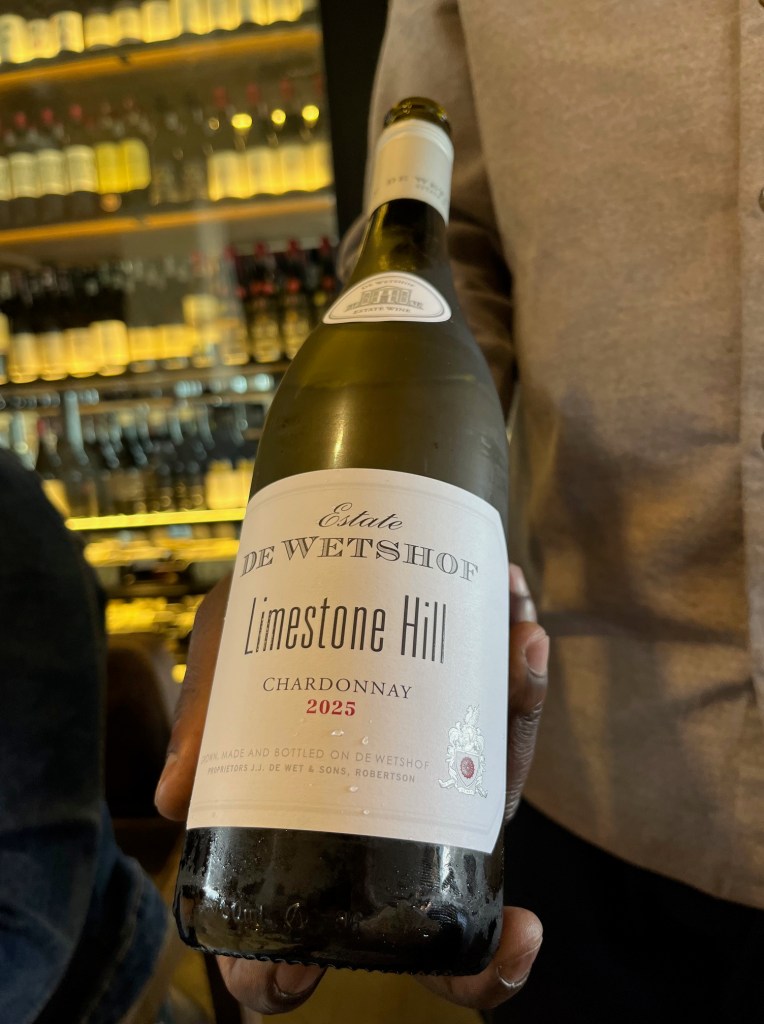
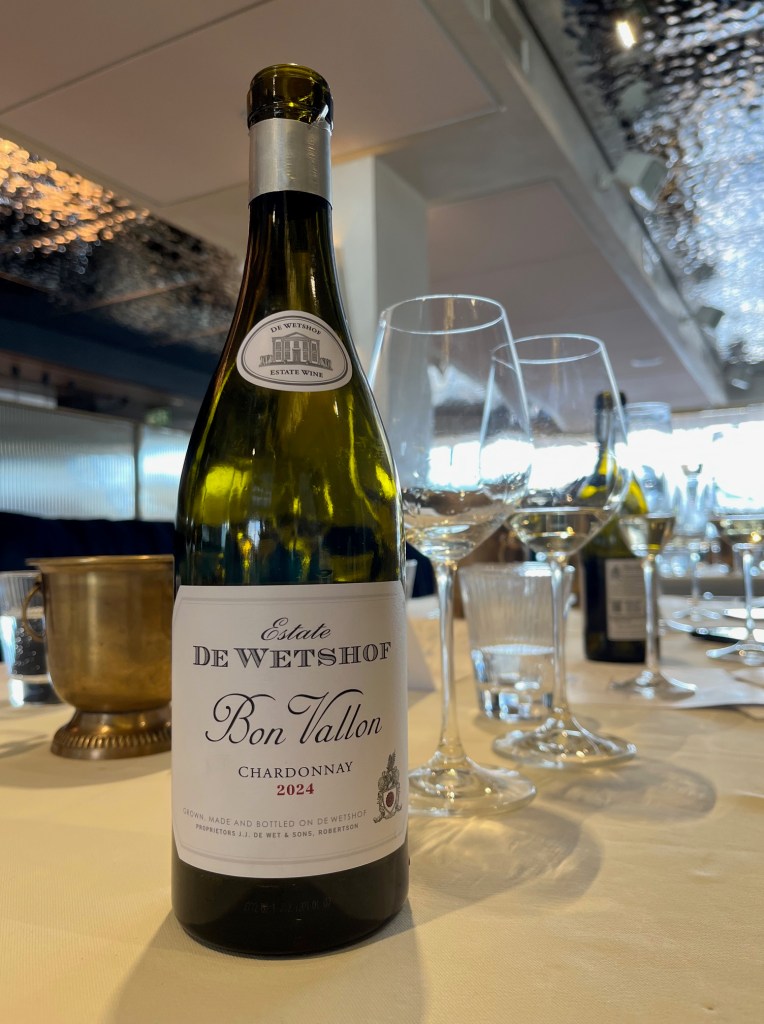
To get back to the topic, let’s take Limestone Hill, for example. It’s grown in valley-floor soils rich in clay and white limestone. This results in a grapefruit, and green apple driven complexity, with a unique roundness in the wine. In contrast, Bon Vallon comes from an elevated, rocky limestone-rich terrain, producing linear, mineral, lemon/lime expressions. Both are unwooded, both are Chardonnay, yet they couldn’t be more different. I’ve got to admit, the drinkability of the Bon Vallon literally left me speechless. First time trying this wine, definitely won’t be the last!
Johann reemphasises his winemaking ethos, “I’m not into dirty ferments or spontaneous fermentation just for the hype. I’m here to show you the site, and how terroir has the ability to really influence a wine’s character”.
I briefly brought up sustainability, and organic practices – keen to touch on practices De Wetshof have implemented to help ensure long-term vineyard health. “We’re pretty much organic”, Johann says, “we just don’t talk about it”. Many may wonder why they don’t get certified organic? “There’s no real South African standard”, he explains. “And I don’t want to bind my hands. If there’s a problem, I want to solve it”. For him, it’s not about marketing, it’s about legacy management. “The goal is to leave the land in a better state than I got it”.
At De Wetshof, indigenous fynbos is encouraged to grow naturally between the vineyard rows, playing a key role in soil health, biodiversity, and pest management. These native plants, along with selected cover crops like vibrant vygies (flowering succulents), are particularly used in young Chardonnay blocks to help improve vineyard hardiness and reduce environmental impact. They’ve also moved toward mechanical under-vine weeders to limit chemical use, further highlighting their commitment to long-term vineyard success.
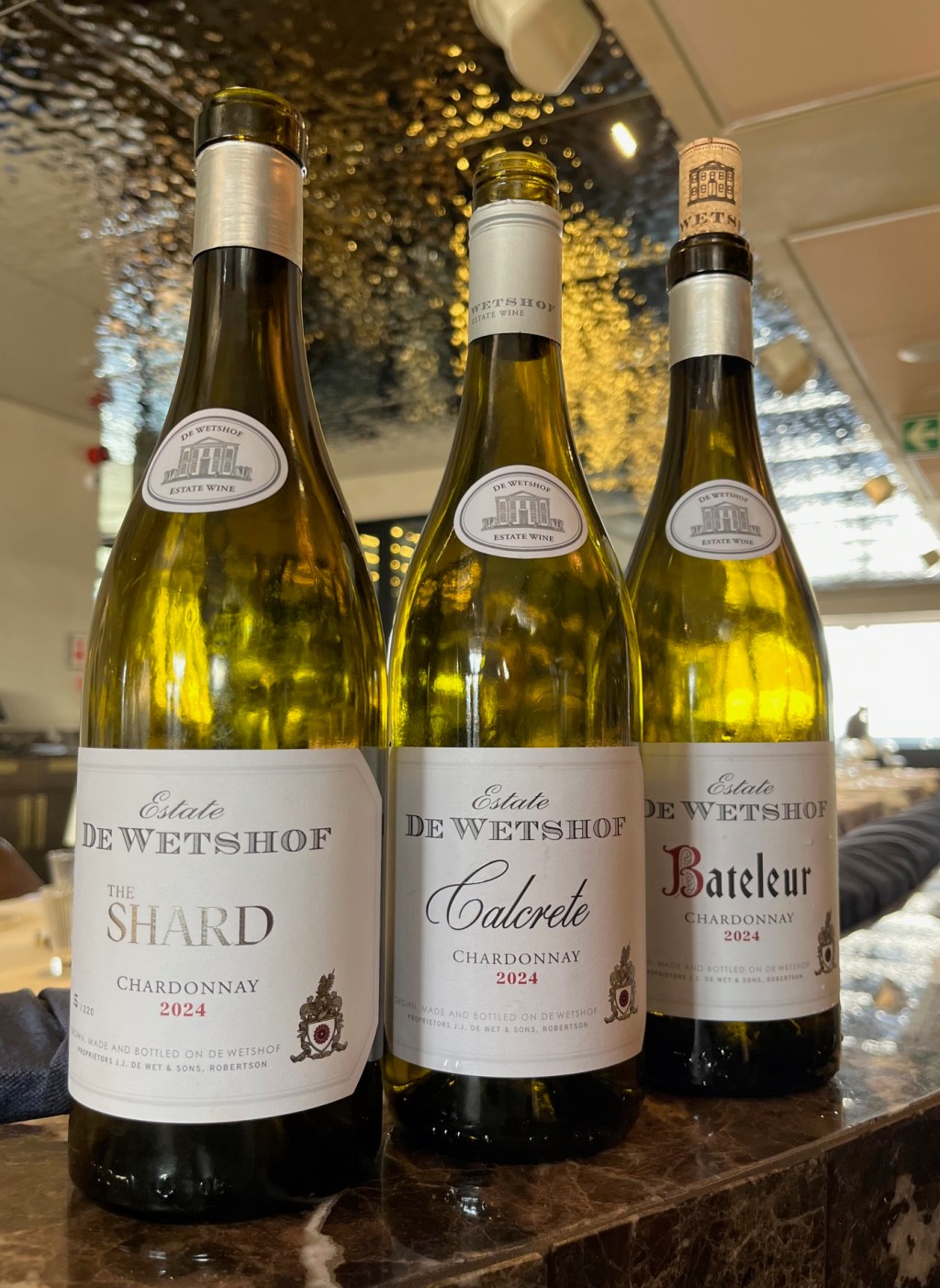
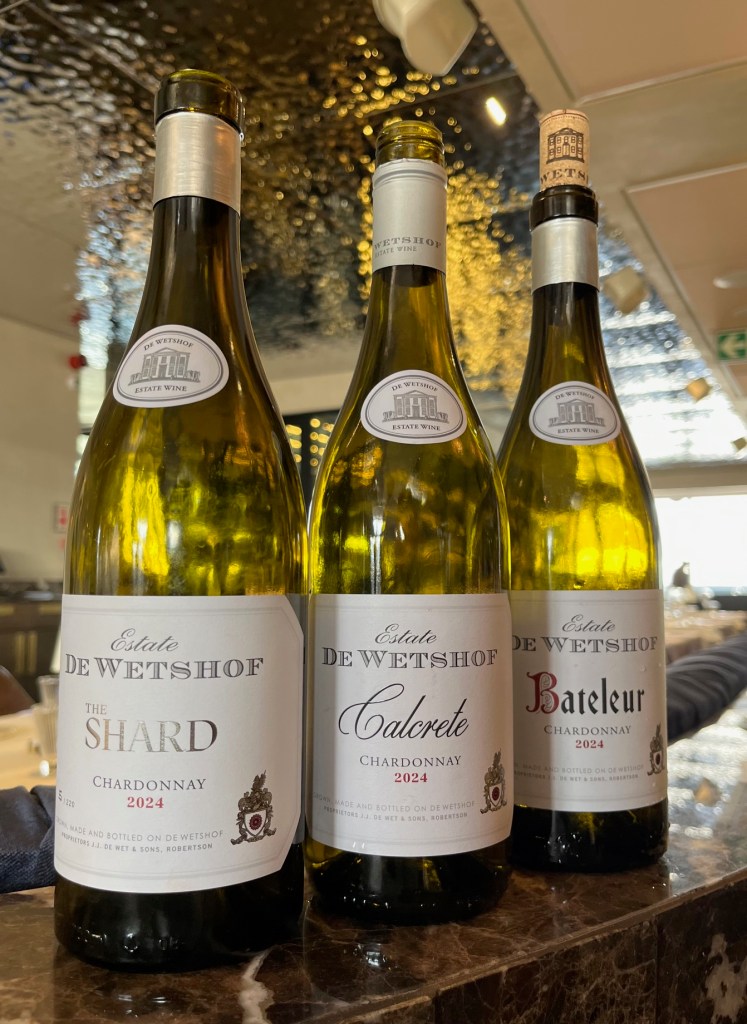
At the top of the De Wetshof range sits the Bateleur. A single-vineyard wine from gravel-limestone soils, built to age and known for its power, structure, and weight. A wine which is produced only in exceptional vintages. This barrel-fermented wine is matured in 100% new French oak for 12 months. The wine shows amazing concentration, with flavours and aromas of lime, green apple, and pear, with hints of vanilla pod and clove spice. The longer you left it in the glass, the more it gave to you. The wine is full-bodied with balanced acidity, leading to a creamy texture and a long lingering finish. The wine shows amazing minerality too, reflecting De Wetshof’s very special terroir. Interesting fact, the 2025 vintage marks the last from the original old vines (1987), with newer plantings (now over 10 years old, planted from cuttings taken from the original block) taking over from 2026.
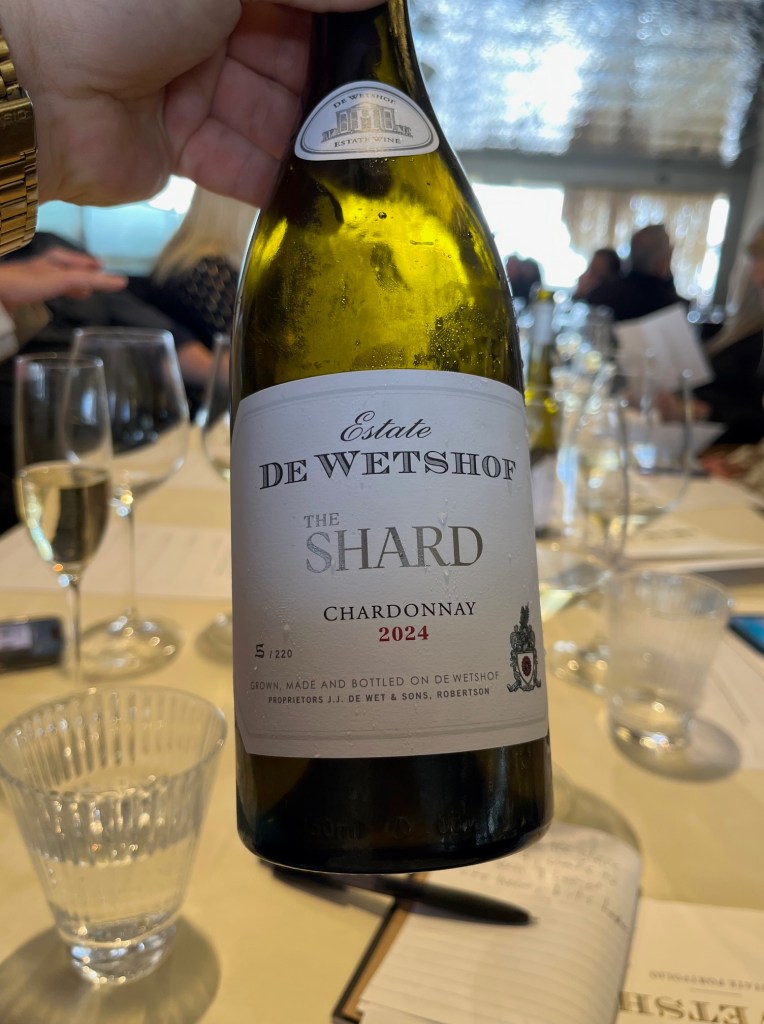
I was super fortunate to be amongst the first people to try De Westshof’s latest creation – a new, rather limited Chardonnay called, The Shard. Fermented and matured in glass globe vessels, this wine doesn’t only represent experimentation, it represents the willingness to push boundaries, and a curious keenness for innovation. Still, after all these years, De Wetshof is setting trends! Still at the top. Just watch how others will follow. Only 200 bottles were produced for the first release, with the wine being priced at approximately R780 per bottle.
“Glass is the purest form you can ferment in”, says Johann. “It’s the perfect form of impermeability. Zero influence of oxygen. Just purity”. The result is a wine that leaves a serious impression. It’s layered, textured, mineral, and precise. It’s proof of what high-end unwooded Chardonnay can be, when done right. I was absolutely flabbergasted by how the wine presented such a pronounced presence after fermenting only in glass. It was a very special experience which I won’t be forgetting anytime soon.
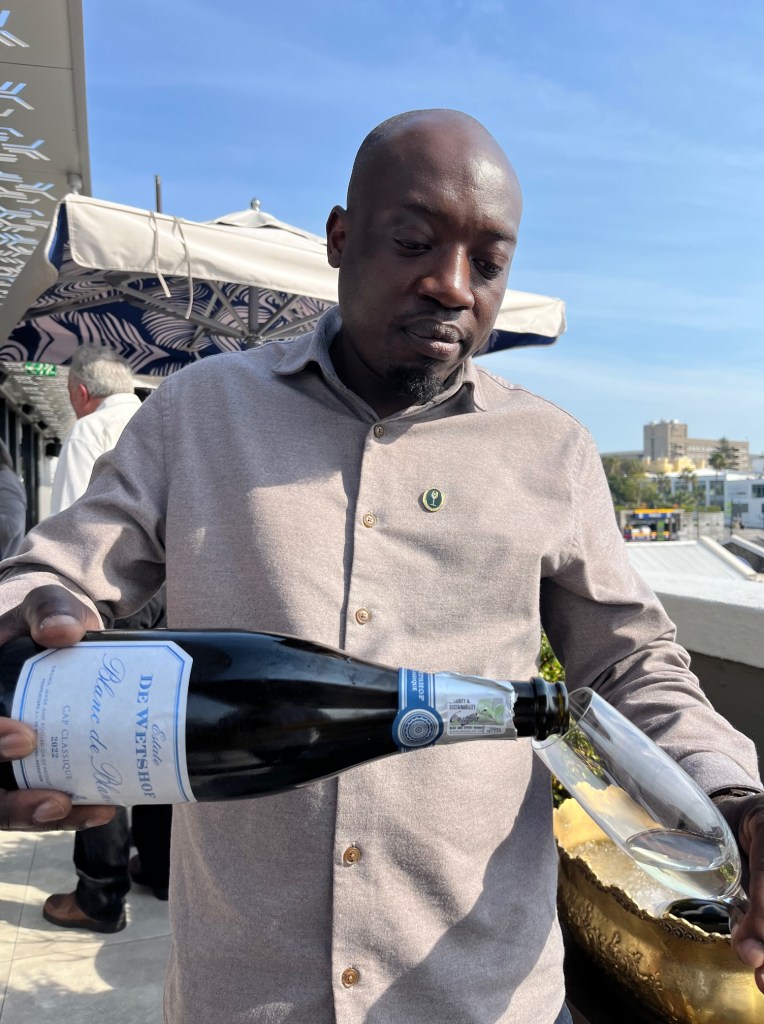
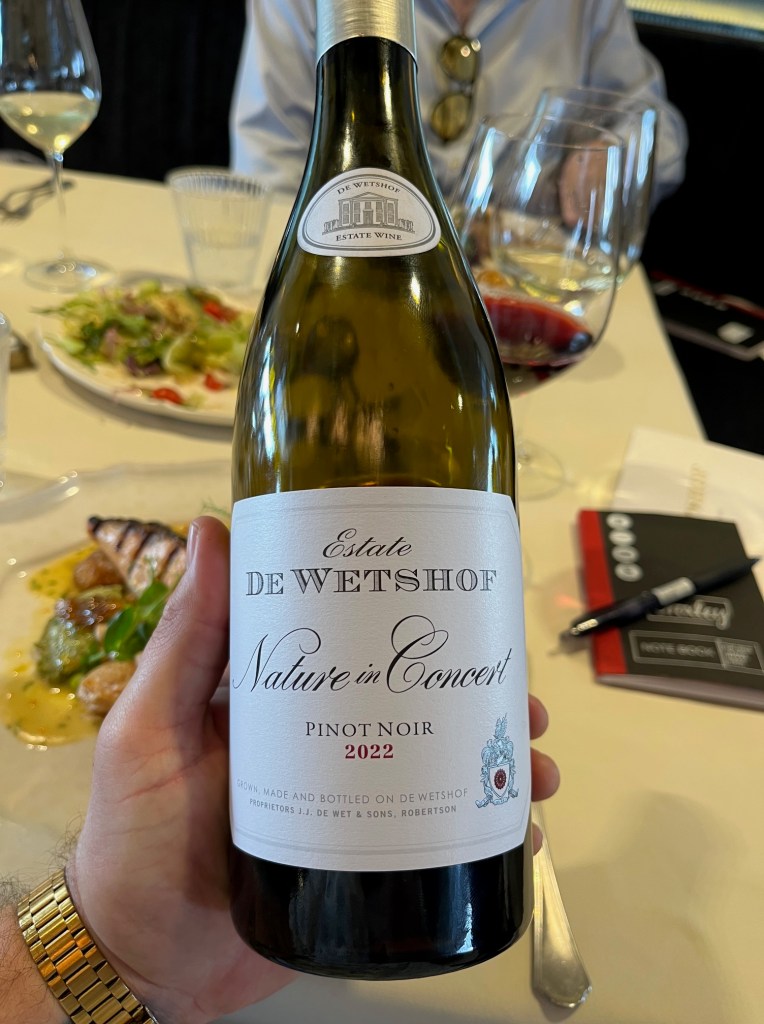
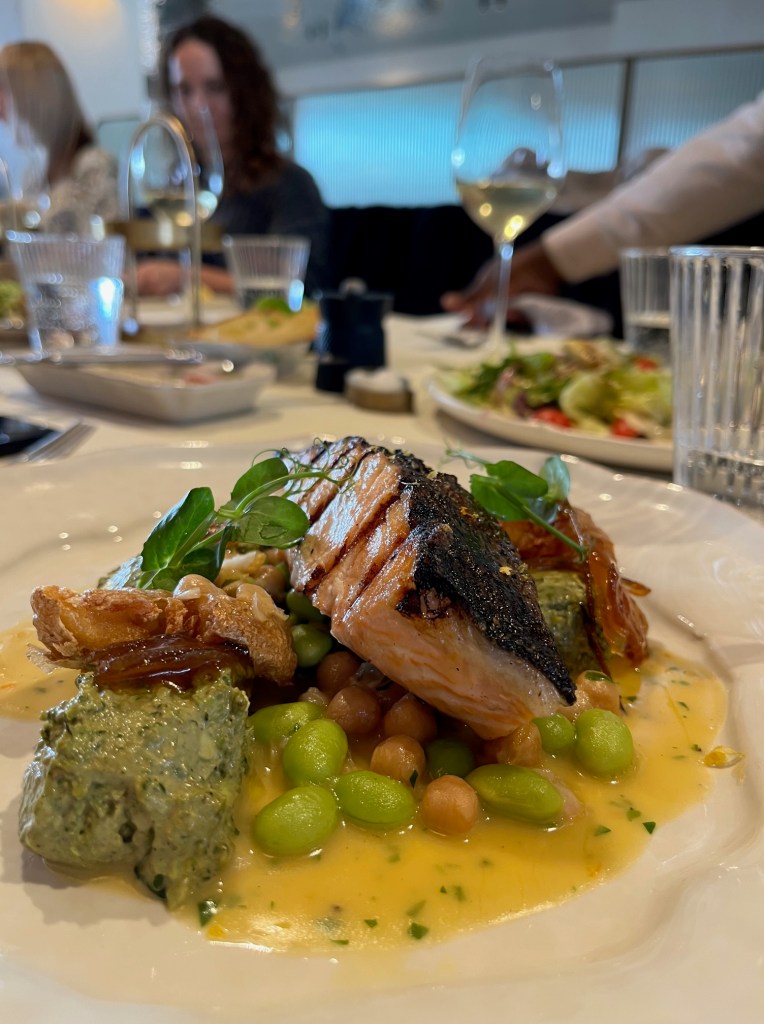
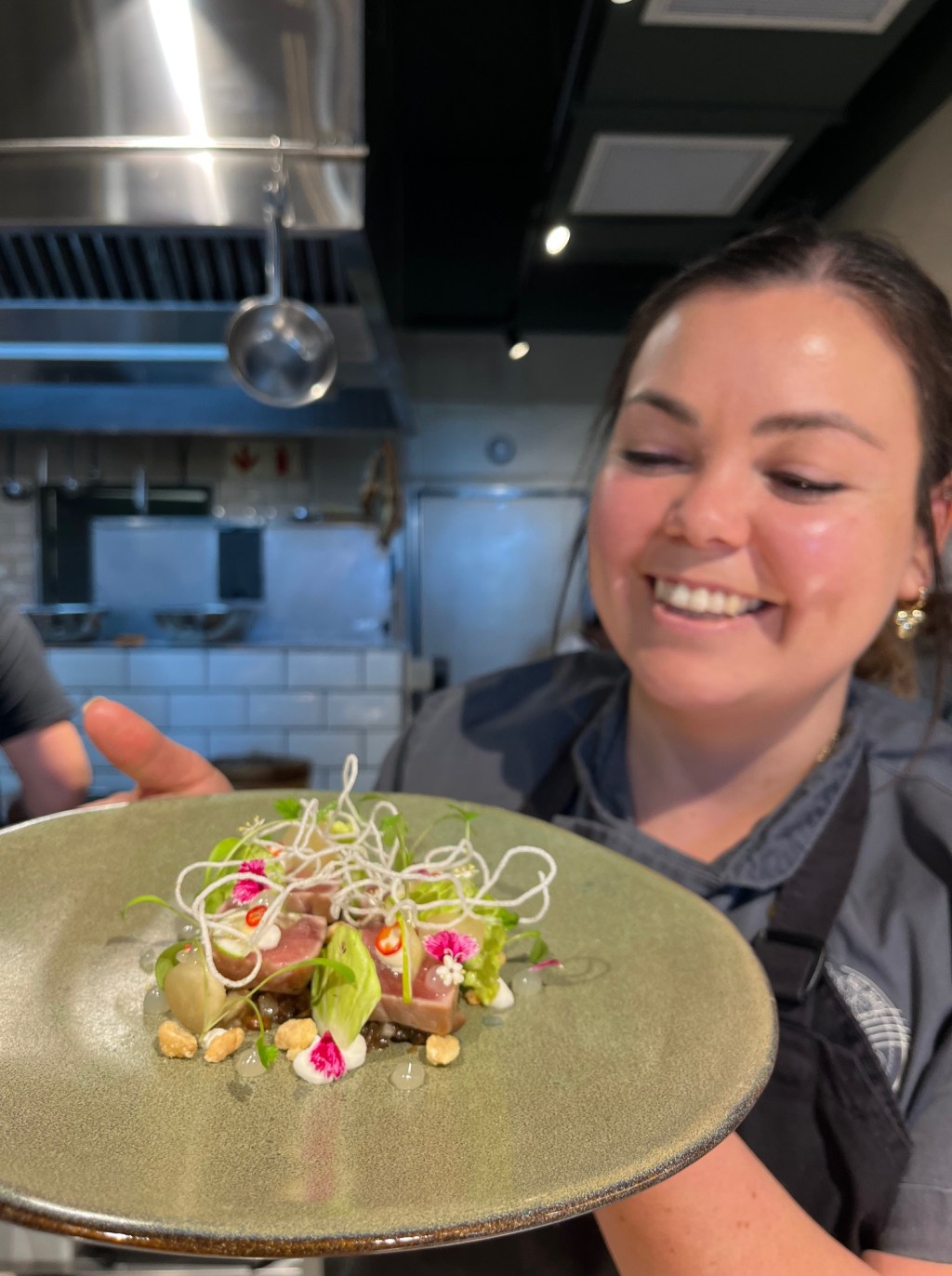
While Chardonnay is the backbone, De Wetshof still cultivates other grapes, for example, Pinot Noir (which I enjoyed with Salmon served with warm bean salad, crispy potatoes, and pea pesto). A worldly pairing! I’d say the Pinot Noir from Robertson shows more black sour cherry and earthy spice. It’s far more serious versus a lot of the Pinot found in Elgin and Walker Bay. Johann supported this view, adding that, “De Wetshof Pinot Noir is more in the style of Nuits-Saint-Georges than Volnay”. De Wetshof also grow Sauvignon Blanc, Riesling, Cabernet Franc, Cabernet Sauvignon, Merlot, Malbec, Meunier, and produce one heck of a Cap Classique!
Interesting piece of information, De Wetshof was actually the first to bottle Riesling commercially in South Africa, but Johann admits, “I couldn’t give it away”. As mentioned above, he loves the variety, but for now, the market doesn’t. This is unfortunately the case for less commercial/popular varieties. A sad, harsh reality. This is why it’s so important to allow yourself to be curious!
During our conversation, Johann said something which really stood out to me. He said, “You need to respect tradition to understand your vineyards, but you need to embrace technology to push them forward”. Spoken like a true leader in South African winemaking.
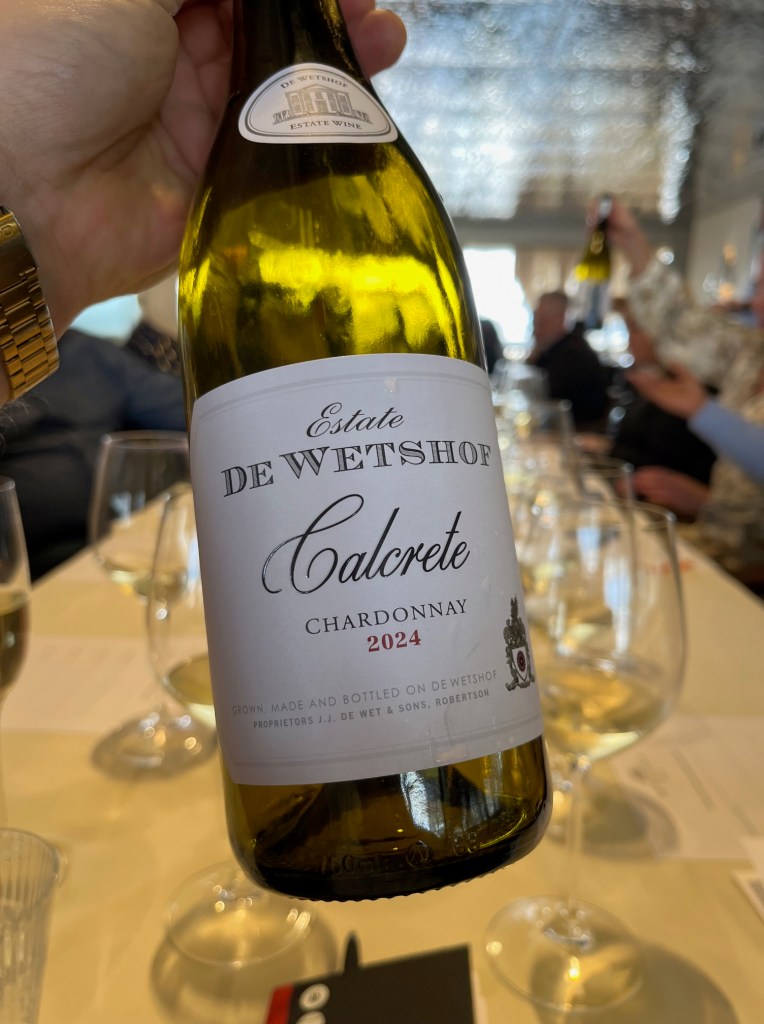
De Wetshof is also a founding force behind Calcrete, a new wine of origin category focused on typical Robertson Chardonnay grown on limestone. Wines undergo blind panel tastings and must reflect typicity rather than “flashiness”. “It’s not necessarily just about premium”, Johann explains, “it’s about consistency, it’s about typicity. Like Chablis – you know exactly what you’re going to get”. Personally, I think this is such an exciting introduction, and movement.
With 70%+ of production exported, De Wetshof is deeply tied to the international market. Events such as CapeWine are vital for keeping the conversation going.
“South African Chardonnay is the most exciting category after Burgundy”, Johann says. “The critics love it. The trade loves it. Now we just need to crack the shelf space”!
In conclusion, from limestone-rich soils and glass globe fermenters, to generations of viticultural obsession, De Wetshof is all-in on one beautiful thing, Chardonnay. As Johann puts it, “If Chardonnay does well, we all do well”. And, judging by the wines we got to taste, they’re doing very well indeed!
My favourite wines on the day: Calcrete, The Shard, Bateleur. Damn my expensive taste!
I’d like to thank De Wetshof for the invitation to explore their wines, new vintages, and new releases, and to Wikus Human and his Marble team for their world-class hospitality.
Buy De Wetshof Estate wines here.



 WINE, FOOD, AND EVERYTHING THAT'S GOOD!
Leave a Reply