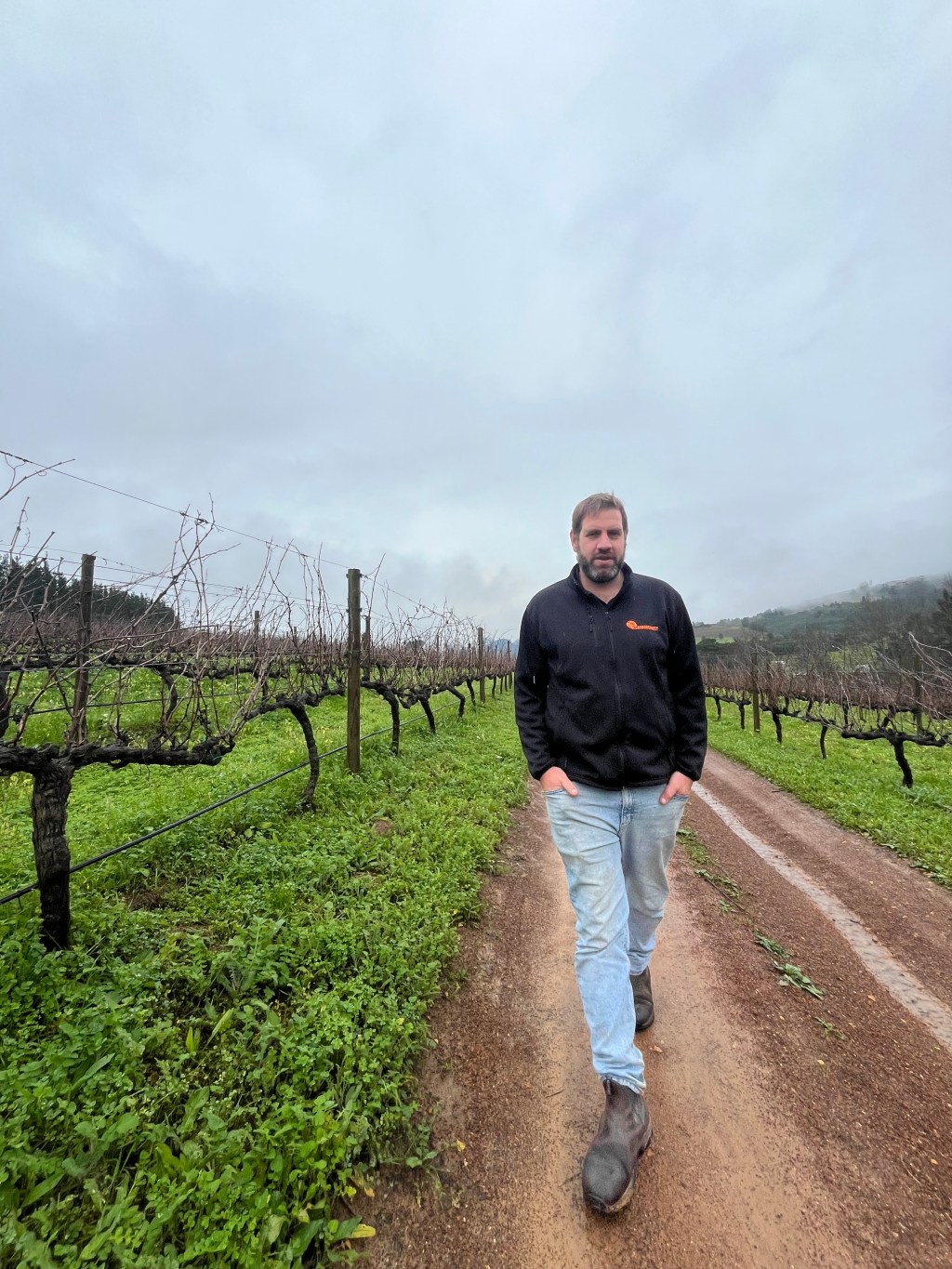
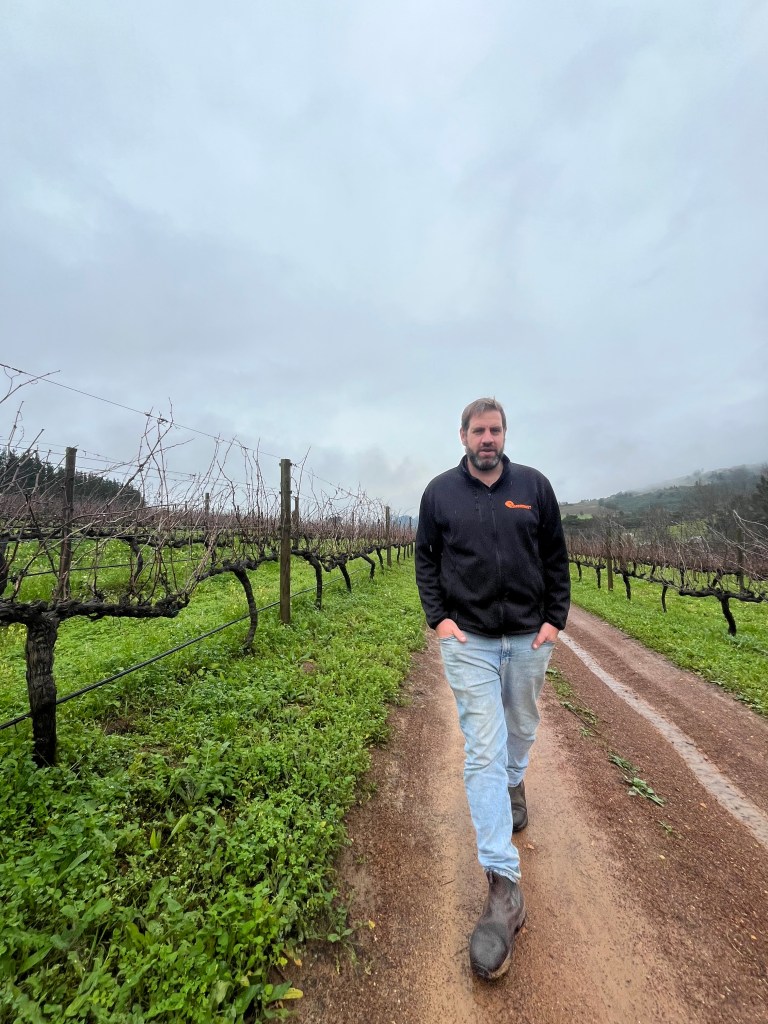
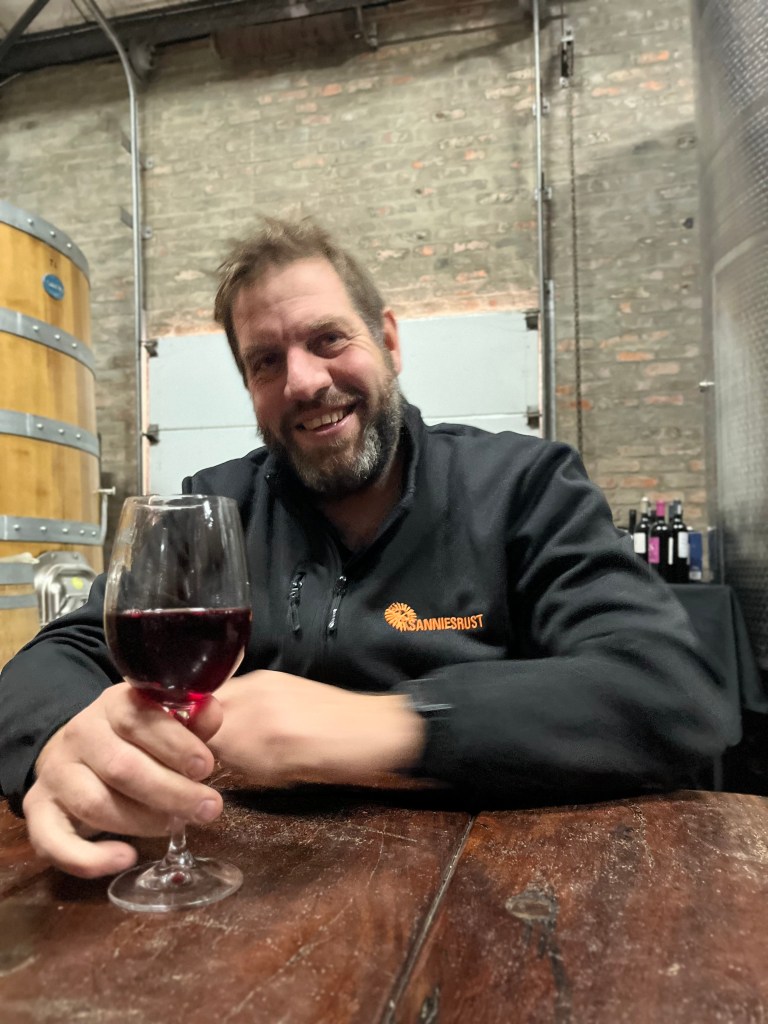
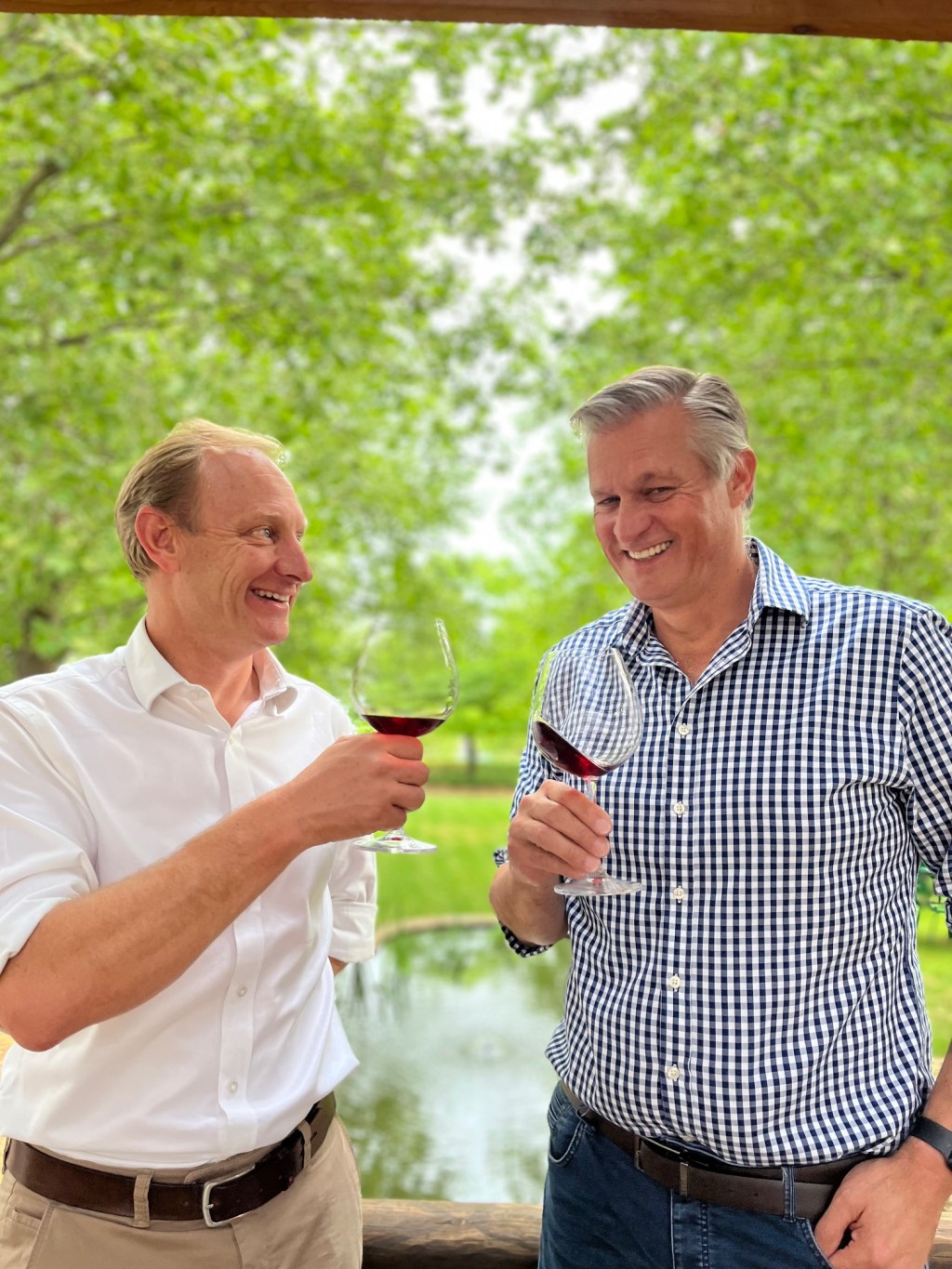
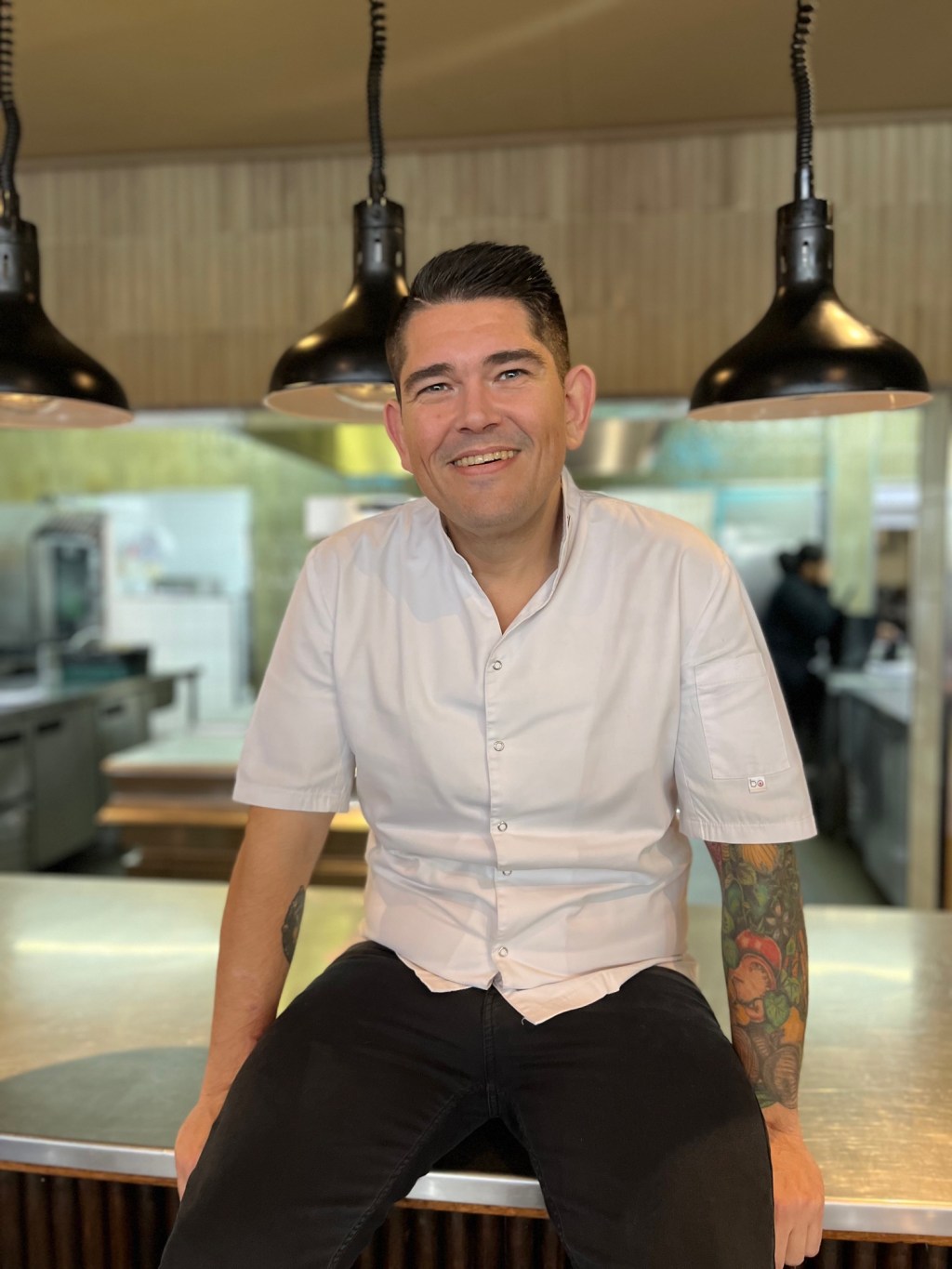
I vaguely recall when I first met Pieter van der Merwe, it was at one of those Mixtape Merchant events hosted by the previous Somm & Co. I can’t remember much (due to the copious amounts of delicious vino consumed on the night, of course), but what I can remember is how his wine made me feel. His wines were (and still are) a combination of experience, geekiness and experimentation, with hints of unpretentiousness and determination. His approach is sincere, and you can taste it while enjoying any one of the Sanniesrust wines.
The idea behind Sanniesrust didn’t come via an epiphany, or market gap analysis, it was a feeling Pieter couldn’t ignore. A deep respect for experimentation was instilled in him from an early age, watching his grandfather (a true Afrikaaner – as Pieter put it) constantly keeping busy with side hustles and hands-on projects. A turning point came thanks to winemaker Ryan Mostert (ex. Silvervis and Terracura, and now at Noble Rot in London), who Pieter met back in 2010. “Ryan just looked so damn happy doing his own thing,” Pieter recalled. Inspired, Pieter negotiated a clause in his contract (when joining David Finlayson Wines from Guardian Peak winery in 2016) that would allow him to produce small batches of his own wine. This ultimately became a lifeline for his adventurous wine soul. And thankfully so, because we now have Sanniesrust Wines!
I asked Pieter what his winemaking philosophy is, and the answer was refreshingly blunt: “Drinkability is key”. His wines aren’t made to sit on a shelf collecting dust or be “picked apart” by wine critics. They’re made to be opened, shared, and enjoyed while in good company. Pieter admits that wines should of course be interesting and promote structure and complexity, but what’s the point if you can’t drink them?
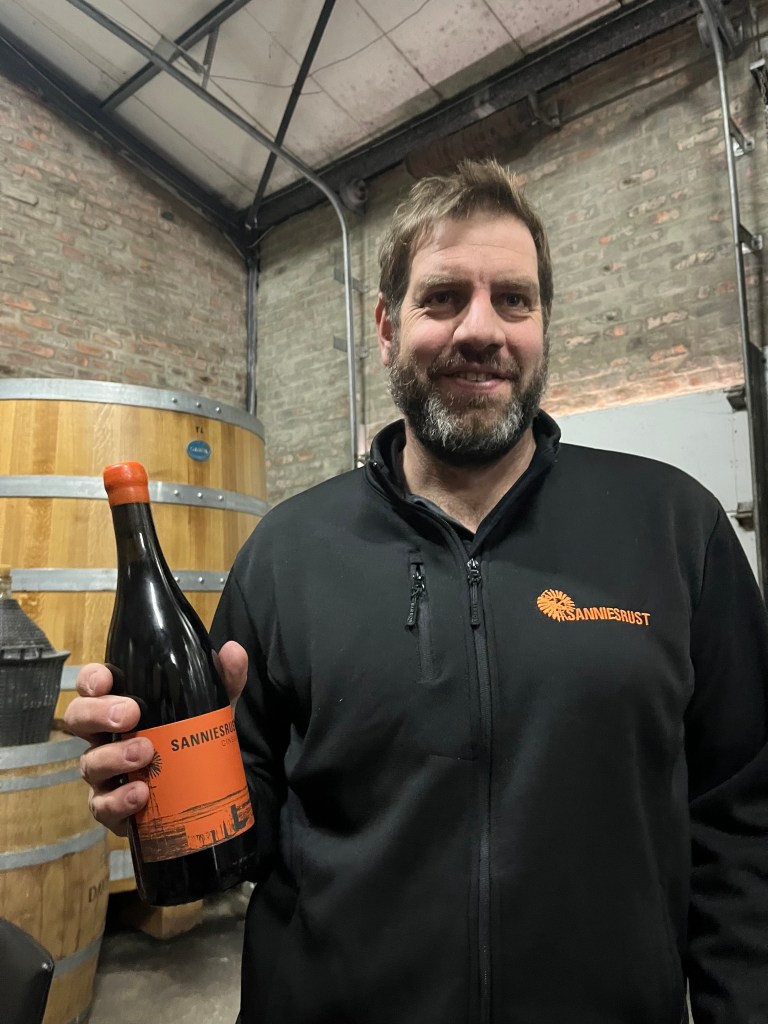
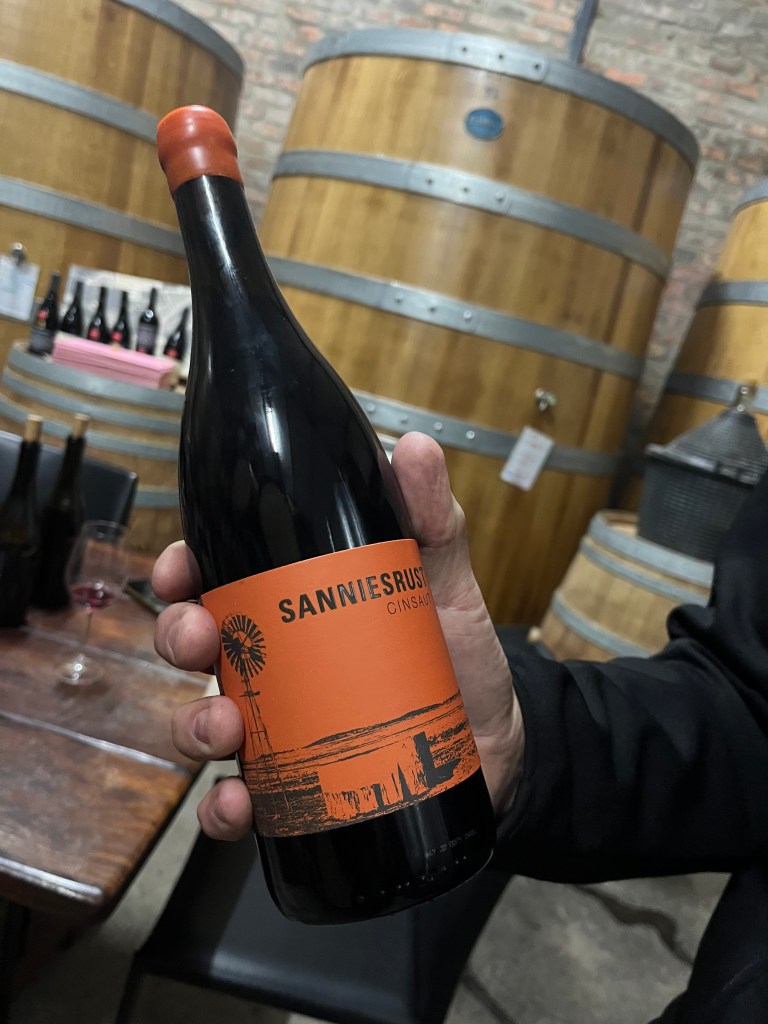
His authenticity extends to the labels too. When asked what sets his wines apart from other producers, his answer was, “Their bright orange labels”! I nearly spat my wine out with laughter.
Although Pieter doesn’t take himself too seriously, the wine he produces lingers. These are wines that are real, expressive, and made without pretence, packed with character and drinkability.
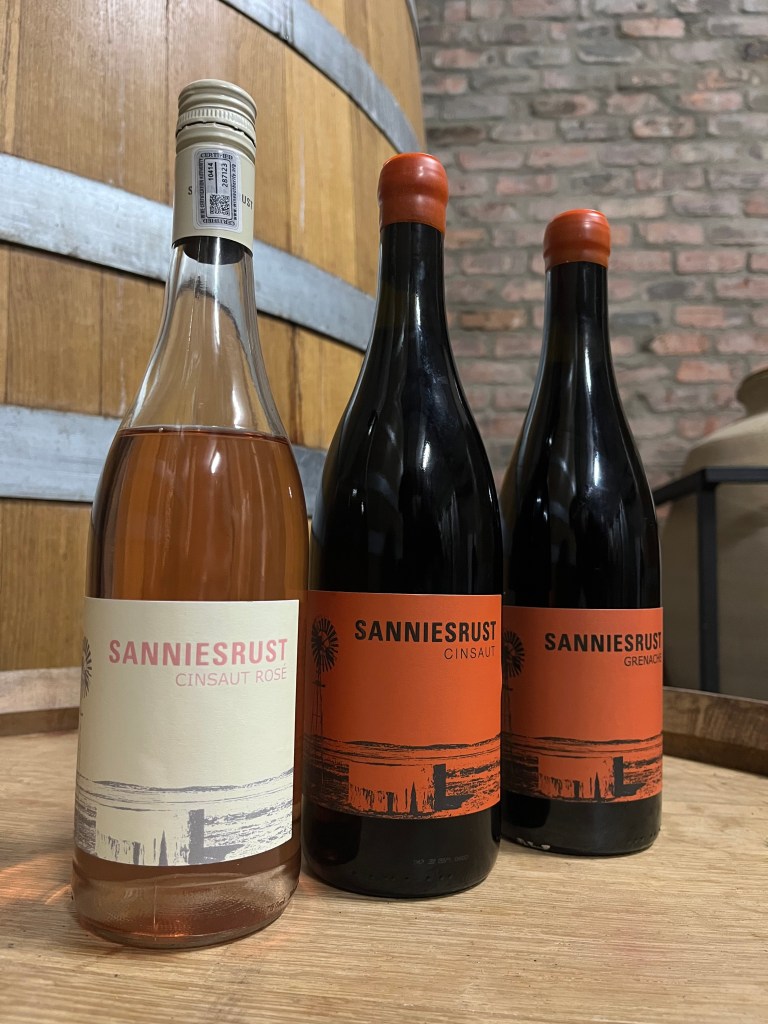
Pieter chooses to work with Grenache and Cinsault, two cultivars that, in his words, “just offer more intrigue and drinkability” than many of their more popular counterparts. These are lighter-style reds with serious substance to them.
His love for Grenache came from the first time he tasted a bottle of Terroir al Límit from Priorat during his Elsenburg days – a wine made by Eben Sadie during his time in Spain. “It was f*cking phenomenal,” he said rather enthusiastically! I’d imagine it’s that particular memory/moment which keeps guiding Pieter in a very specific winemaking direction.
Although he sources fruit from across the Western Cape, he favours Stellenbosch whenever possible. The reason being that Pieter founded his passion for wine in Stellenbosch, and the Cape Winelands will forever hold a very special, and influential, place in his heart. He said, “Everything here is good. It’s pretty much a safe bet”.
For Pieter, sourcing is everything, and buying in small volumes pushes him creatively. “It forces you to bring out the best in what you get,” he said. The results are wines with a vibrant curiosity about them. I guess that’s what keeps our palates intrigued. Winemakers will always strive for consistency, but harvest factors, and different terroirs, will always leave their distinct marks on the flavour profile of a wine. So each year is the same, but different.
Like any solo business venture, it hasn’t been easy. The biggest hurdle Pieter said, is capital. “If you can’t solve the money problem, you can’t survive,” he told me. Every bottling brings a sense of self-doubt. “You ask yourself…is it good enough?”. This made me think back to when he was skeptical about releasing the 2023 Cinsault into the market. The wine had him second-guessing for weeks. I happened to see him at a brewery and he said he wanted me to try the wine and give him feedback. I remember popping the cork when I got home and tasting the wine. I didn’t know what to expect, and I was preparing to properly analyse the wine to offer my professional insight. However, when I tasted the wine, it was fresh, expressive, and pronounced, with bright a red fruit character and subtle spice. It was explosive, and so ready for its big release! I called Pieter and told him that he needed to bury that self-double because the wine was in fact, AMAZING! He re-evaluated the wine, and scheduled it for release. A few weeks later, the wine was awarded a 4.5 star rating by John Platter! I was so happy for him.
He said that nowadays his wife, a chef by trade, is his secret weapon. While tasting, and putting these wines together, Amelia offers her opinion, giving her “yay or nay”. “She’s got a razor-sharp palate, which I trust 100%”, he said.
We tasted through his Rosé 2025, Grenache Blanc (barrel sample), Cinsault 2024, and Grenache Noir 2024. I’m a fan of all the wines he produces, but it was the Cinsault which had me “all shook up”. Quick analysis below:
Grapes are sourced from young vines, which are high yielding – this is actually the main reason why Pieter produces the Rosé. He “bleeds off”, a process where during the production on the Cinsault red wine, he removes some juice to help with the concentration of colour and flavour. The removed juice is pale in colour and will be further produced as if it was a white wine, giving you a crisp, clean, fruit-forward pink wine.
The Cinsault is pale ruby in colour. It is pronounced on both the nose and palate, flavours and aromas of red cherry, pomegranate, red plum, ripe red apple, and cranberry, with a herbal undertone to it, as well as cinnamon spice, and a hint of black tea. The wine is dry, has a medium (+) acidity, medium (-) stalky tannin structure, medium alcohol, and medium body. The flavours (mentioned above) are super evident on the palate, and the structure of the wine gives it a “crunchy” character. The finish is juicy, and refreshing, which I’d say is medium (+). As Pieter politely (and correctly) put it, this wine is certified smashable!
If there’s one thing he’s learned through the business process, it’s that, “You’re more resilient than you think”. And, I’d believe that with each small win, that truth becomes more valid.
Beyond Stellenbosch, Pieter has an eye on the future, and the Free State. On his family farm, Sanniesrust, near Tierpoort, 50km south of Bloemfontein, he’s planting the first vines of what may become a winemaking revolution. The project began in 2022 with 150 vines of Colombard, Cinsault, and Grenache. Over time, Muscat and Grenache Blanc will join to create a unique field blend. His dream is to one day release WO Free State wines from this very land, land which is special to him and his family.
“It’s cold, high, and experimental,” Pieter admitted. But, the challenge seems to excite him. “I can’t afford land in Stellenbosch, but I can do something meaningful here. The farm’s been in the family for nearly 70 years, and this feels right.”
Wine enthusiasts can expect the first vintage from the Free State to be in 2027, with commercial releases from 2028 – tiny volumes for now, but undoubtedly very special releases. “There are a few hobbyists around Clarens and Bloem keen to grow, and we want to show it’s possible…maybe even put the Free State on the wine map”, he said passionately.
Looking five years ahead, Pieter dreams of a brand home for Sanniesrust, and producing wines that champion origin, especially Free State. I asked him about the growth of the business. How big does a boutique producer ideally want to become? “Any business wants to scale, but I never want to lose that boutique edge,” he said. It’s obviously a very fine balance, but I have no doubt this brand has what it takes to grow substantially, but organically.
I enjoy throwing fun questions into the mix. One of them being: If your wine could speak, what would it say to the person enjoying it? “It would say, have another bottle!”. That, in essence, captures what Sanniesrust is about – wines full of life, meant to be opened, shared, and remembered.
I know that if Pieter wasn’t a winemaker he’d want to be a pilot. Ironically, he already somewhat is. Every sip you take of a Sanniesrust wine has the ability to transport your taste buds into a brand new dimension!
Great news, the blog has limited access to 10 cases of the pre-release Sanniesrust Cinsault 2024 for only R160 per bottle (normal price R190)! Please note that orders are per case (6 bottles), and for South Africa only. First come, first serve.
Purchase the Cinsault here.


 WINE, FOOD, AND EVERYTHING THAT'S GOOD!
Leave a Reply